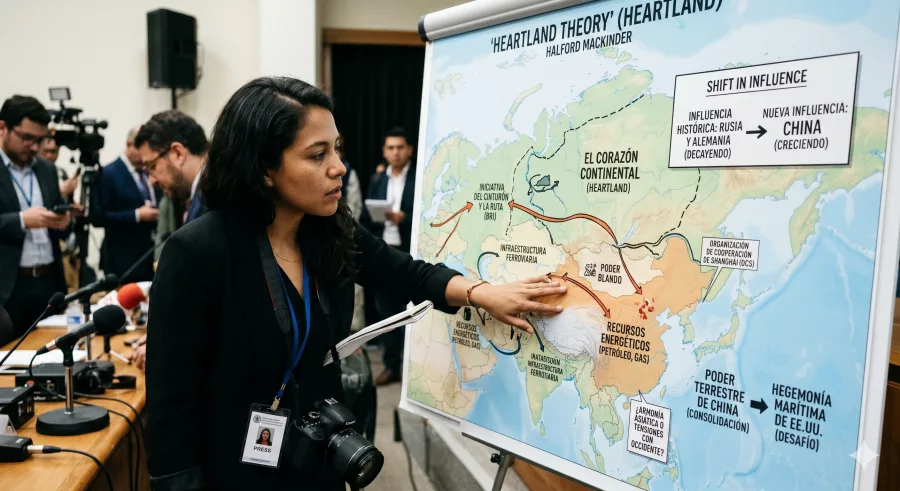


The Fall of Communism in China: Lessons from the Collapse of the USSR
Part 1: Introduction
Part 2. The Communist Framework
Part 3. Implementing the Communist Framework Through Force and Coercion
Part 4. Post-Stalin Evolution and the Collapse of the USSR
Part 5: CCP 1989-1992. Ideological Hybridization and Attack Strategy
Points in common with, and differences from, the post-Stalinist USSR
One point in common, which is part of the final stage of the process of “fixing” the communist framework in the population, is the relaxation of repression and terror, and this is something that two figures, Nikita Khrushchev in the USSR and Deng Xiaoping in China, carried out with great similarity and, again, over a very similar period of time (11 years), undertaking a critical revisionism of the previous period and lowering, as we said, by several orders of magnitude the repression of the population in China. With Khrushchev it was called “de-Stalinization” and with Deng “Boluan Fanzheng” [1], which means “eliminate chaos and return to normality.”
It is also precisely at this stage that differences with the Soviet process begin to emerge, because the lack of sufficient natural resources (oil, gas, food, etc.) made it impossible to pose a scenario of economic independence similar to the USSR’s. That is why Deng took a different path through several guiding ideas that remain in force today, such as “socialism with Chinese characteristics” or “one country, two systems” (Hong Kong and Macao maintain independent economic and governmental systems).
The first, “socialism with Chinese characteristics,” justified economic opening and reform by the relatively low level of material wealth and the need to take part in economic growth before pursuing an egalitarian form of socialism, which in his view would lead to a communist society as described in Marxist orthodoxy. This involved a series of economic reforms that went from the decollectivization of agriculture and the opening of the country to foreign investment in the late 70s and 80s, to the privatization and consolidation of most of the state industry, including the lifting of price controls and protectionist policies in the late 80s and 90s. Despite this, public monopolies were maintained in strategic sectors such as banking, telecommunications and energy.
As a consequence of this process, rising corruption and runaway inflation contributed to the Tiananmen Square protests in 1989. As we saw, the protests historically coincide with the start of the fall of communism in the Warsaw Pact nations; in fact, on June 4, when the military operation against the protesters was authorized by the CCP, Poland was voting in its first democratic elections, the starting point of that year’s revolutions. In Mexico too, the Institutional Revolutionary Party (PRI), a member of the Socialist International since its creation, was turning toward center-right policies, leading in 1989 to the creation of the Party of the Democratic Revolution (PRD) as the representative of the leftist ideology the PRI had abandoned. In addition, the crisis made visible the deep disagreements between the CCP’s most conservative sector and Deng’s reformist policies. The actions of the Chinese regime, with thousands dead and imprisoned, were widely condemned internationally, and the arms embargo promoted by the US and Europe continues to this day.
Once again, there are many parallels with Khrushchev and the Cuban missile crisis (1962), whose weak handling, according to the CPSU’s conservative sector, forced him to resign a couple of years later and then retire to an apartment in Moscow and a dacha in a rural area provided by the State. In China, Zhao Ziyang, General Secretary of the CCP and until then considered Deng Xiaoping’s natural successor, was removed from power for his weakness in the face of the protesters, spending the rest of his life, until his death in 2005, under house arrest. Deng, on the other hand, who had never held any significant office except that of chairman of the Central Military Commission, from where he exercised total power over the Party, ceded his post to Jiang Zemin and also positioned him as his successor in the Politburo.
Jiang Zemin kept control of Shanghai during the crisis, and his choice over Li Peng, head of the Party’s conservative sector, showed the intention to maintain the reformist course. Deng, in his farewell from the chairmanship of the Central Military Commission at the end of 1989, wrote what is interpreted as his political testament in two parts [2]; the first, of 24 characters, was addressed to the Foreign and Defense Policy that China should follow:
“Observe calmly; secure our position; cope with affairs calmly; hide our capacities and bide our time; be good at maintaining a low profile; and never claim leadership.“
The next 12 characters were addressed to the Party leadership:
“The enemy troops are at the foot of the wall. They are stronger than we are. We will basically have to take a defensive position.“
At China Watch Institute we have already cited these same words on several occasions because of their extraordinary importance for understanding the CCP’s true later strategic positioning, since it is quite evident that there is not the slightest trace of ideological redefinition in them.
As context for this period of internal reflection that opened after Tiananmen and would last until Deng’s famous “southern tour” in 1992, it is important to keep in mind two issues related to Chinese particularity.
First, for the Chinese, everything far from the core of their millennial culture is barbarian (yi) [3] and, although China always distrusted barbarians, as the Great Wall shows, it never gave up trading with them. Moreover, its enormous capacity for adaptation has allowed it to maintain its identity under the most adverse circumstances, even getting the Mongol and Manchu invaders to become sinicized in order to rule China.
The second issue, according to Zhang Weiwei, a CCP member and professor of international relations at Fudan University (Shanghai), comes from combining four factors that define the exceptionalism of Chinese civilization: a super-large population, a super-vast territory, a super-long tradition and a super-rich culture. Consequently, relying on these four factors, including the rich historical-military heritage, can result in competitive advantages. In particular, years earlier the study of the “Warring States” period (5th century BC-221 BC) had intensified, in which Sun Tzu’s “The Art of War” [3] is undoubtedly its most famous exponent and one of the sources of inspiration.
As we said, one of the particularities of the Chinese people is their capacity for adaptation while maintaining their identity under the most adverse circumstances. This special ability to detect what is essential and what is accessory when defining what makes something part of one’s identity is what allows the CCP to create an unprecedented ideological hybridization that resolves the difficult situation for decades.
“Socialism with Chinese characteristics,” a concept launched before the Tiananmen crisis, hybridizes socialism with a market economy, introducing Chinese particularities as an element of exception and even of social cohesion, while, and this is the post-Tiananmen novelty, it begins the war with the West. In reality, a common mistake in the West is to assume as a characteristic of the communist framework the orthodox application of Marxist-Leninist dogmas, for example in the economy, since that was the norm in the Soviet Union and many other countries, so that “socialism with Chinese characteristics” open to the market economy, simultaneous with the fall of communism in Europe, was interpreted as a progressive abandonment of the ideology and as a sign of weakness of the regime in China. In fact, the CCP itself took care to foster this same impression in later years through successive concept-ideas such as, for example, the “peaceful rise,” which we will address in the next article. It was not understood that lying, deception, are part of the communist framework and that Deng’s words to the Party, rather than the concept launched to the Chinese population and international markets, were the CCP’s true roadmap. Cornered ideologically and politically, it decided to declare war on the Party’s enemies.
“The formation and procedures used in military strategy must not be divulged beforehand” (Sun Tzu) and, consequently, it is essential to consider the actions and results over a longer time span, over the following decades. One advantage of not having elections every four years is that it allows planning over timeframes unthinkable for democratic governments, although an important clue can be found in the book “Unrestricted Warfare” [5], written by colonels Qiao Liang and Wang Xiangsui and published by the Chinese People’s Liberation Army (PLA) publishing house in 1999. Recently, numerous American analysts have been giving growing importance to this book as a sample, in the manner of a manual, of the process that has been carried out since 1992. It asserts that war does not need armed intervention and can be waged in any field and by any possible means. In its view, the economy, technology or culture are weapons as powerful as military ones and can act simultaneously on multiple flanks. The planning of the military operation from 1992 on generally follows principles such as “defense is for times of scarcity, attack for times of abundance” (Sun Tzu) or “all military operation involves deception” (Sun Tzu), highlighting, without aiming to be exhaustive, the following warlike movements to help visualize the general strategy:
- Acknowledging technological and economic inferiority, foreign investment is facilitated, including certain measures of economic liberalization. The enemy is drawn into one’s own territory by taking advantage of the size of the domestic market and low labor costs.
- As Sun Tzu said, “espionage is essential to military operations, and armies depend on it to carry out their actions,” so continuous espionage and theft of foreign intellectual and technological property proceeds with the support of the army, in order to strengthen domestic industry. The enemy’s power is drained to strengthen one’s own troops.
- Deception is practiced with the idea of opening to the free market when in reality it is an intervened market in which, for example, private companies are forced to have CCP members in their decision-making bodies, a judiciary dependent on the Party acts on the market at its discretion, and mechanisms are developed that direct part of the wealth generated back to the Party, using it not only to enrich some of its members, but also to strengthen the People’s Liberation Army (PLA) and the foreign diplomatic machinery.
- The tools of social control and control of local media are increased in proportion greater than the improvement in quality of life, to favor stability over any other issue, including human rights. The PLA as a tool of repression and social control becomes so indispensable that Hu Jintao would declare that the army’s main mission is the protection of the Party and not of the government or Chinese citizens.
- Propaganda is strengthened by launching a diplomatic and cultural offensive that includes a presence in the main international organizations (UN, WTO, WHO, etc.), with various pressures (bribes included) to guarantee real influence, along with a plan to control foreign media and film studios to allow favorable coverage of the regime. The Confucius Institutes are operated, rather than as spaces for learning Mandarin abroad, as spaces of covert propaganda.
In 1992 Deng reappeared at 88 years old to carry out what was called “the southern tour,” visiting Shenzhen, Zhuhai, Guangzhou and Shanghai among others. This tour served to definitively reaffirm the reform program and, among other things, Deng uttered the famous dictum “to get rich is glorious.” According to Deng, Mikhail Gorbachev was a fool for abandoning the party’s monopoly on power without reforming the economy, and that was precisely what the CCP did but, unlike Gorbachev, it did so without changing the framework in essence and relying on the deception of that “socialism with Chinese characteristics” to hide what was really happening.
As Sun Tzu said, “the ultimate point in the deployment of an army is to arrive at formlessness. When you have no form, undercover espionage cannot discover anything, since information cannot create a strategy.” The complexity of the attack, reaching “formlessness,” is created by multiplying the fronts (economic, technological, cultural, military, political) with unconventional weapons (financial debt, media control, business control, espionage, bribery) while diplomacy (including the United Front Work Department) is used to launch false or contradictory messages (“peaceful rise,” “capitalist socialism”) and infiltrate multiple international organizations in which to exert influence for the Party’s benefit. In addition, the combination of social control with the size of its population and its diligent nature makes it possible to produce at an extraordinary pace, maintaining, through its cost competitiveness, the West’s interest in investing in the country, despite the drawbacks, until it became the “factory of the world.” “What induces adversaries to come to you of their own accord is the prospect of gain” (Sun Tzu).
References:
[1] https://www.biografiasyvidas.com/biografia/d/deng.htm . Ruiza, M., Fernández, T. y Tamaro, E. (2004). Biografia de Deng Xiaoping. En Biografías y Vidas. La enciclopedia biográfica en línea. Barcelona (España) 拨乱反正». www.chinakongzi.org (in Chinese)
[2] Georgina Higueras: “España-China, diez años de asociación estratégica”
[3] Georgina Higueras y Rumbao: Chapter 4 – “China: todo bajo el cielo”
[4] Sun Tzu – “The Art of War”
[5] Qiao Liang and Wang Xiangsui: “Unrestricted Warefare”. Beijing, PLA Literature and Arts Publishing House, Febreuary 1999.
[6] CWI-Agustín Puzo, 2020 – “China, 70 años de guerra encubierta”