

Over the past decade, artificial intelligence (AI) has gone from being a mere technological tool to becoming an essential field of global geopolitical and economic competition. The United States, China and India are each shaping, in their own way, national strategies that reflect different visions of how to lead the future of this transformative technology. While the United States and China have dominated the debate on technological supremacy for years, Delhi has burst in with a proposal that seeks not only to compete, but to redefine the role of emerging countries in this race.
U.S.: technological leadership and control of the value chain
The United States has sought to consolidate its position as the global AI leader by articulating a policy that combines innovation, private investment and strategic alliances. Its national AI strategy (published in 2025) includes more than 90 federal actions aimed at accelerating domestic technological development, protecting national security and expanding its international influence through the export of AI solutions.
U.S. policy places special emphasis on maintaining the competitive edge in frontier technologies, such as large language models and high-performance hardware, in addition to strengthening the rules and regulatory capabilities that favor domestic adoption and the export of AI. Part of this approach includes the use of export controls on semiconductors and sensitive technologies, for both commercial and strategic security purposes.
Cooperation with allies has become another pillar. In 2023 the United States–India Initiative on Critical and Emerging Technology (iCET), was already established, a bilateral framework to advance emerging technologies, including AI and semiconductors, reflecting Washington’s intention to build trusted supply chains outside the competitive environment with China.
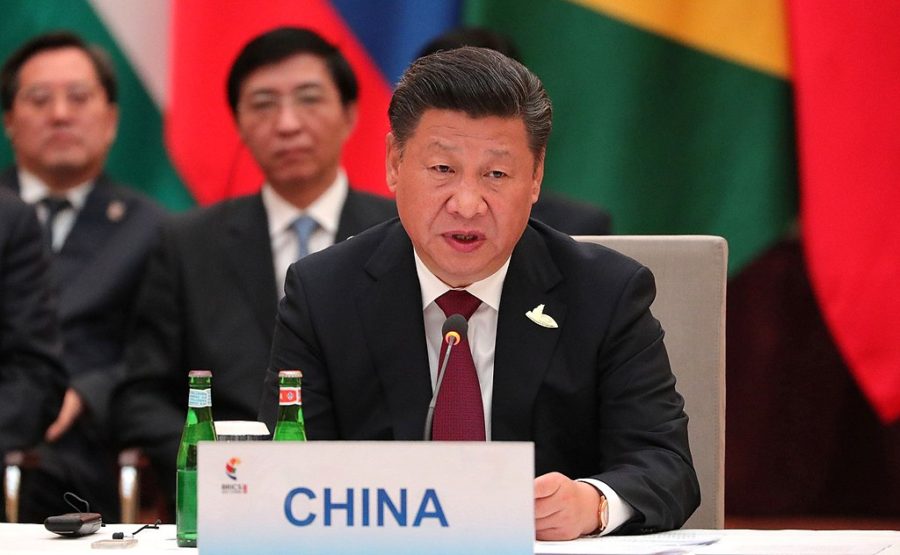
China: state integration, mass diffusion and global expansion
China, for its part, has structured its AI strategy around a more centralized, state-led management. Since launching its artificial intelligence development plan in 2017 with the goal of becoming the world leader by 2030, Beijing has promoted massive investments in high-performance computing, data, smart cities and the integration of AI into productive sectors.
The Chinese approach is distinguished by its push for the broad diffusion of technologies and its strong inclusion of AI in the real economy: from advanced manufacturing and logistics to public administration and services. AI models in China tend to be more open and globally accessible, which facilitates their adoption in the developing world and lowers the technical barrier to entry for countries that lack advanced structures.
In contrast to the American model, the Chinese strategy also promotes a stronger state role over data and infrastructure capabilities, favoring integrated national ecosystems that can compete with global providers.
India: a third player with global ambitions
India, although historically behind the United States and China, has accelerated its position in the AI race, becoming a key strategic player in Asia and the Global South. According to the Stanford Global AI Vibrancy Tool, India recently ranked third in the world, behind the United States and China, thanks to its growth in AI adoption, research and innovation.
New Delhi has adopted a hybrid approach that combines market components with digital inclusion policies. Since the launch of the national INDIAai platform and the IndiaAI mission, the government has promoted initiatives to democratize access to technology, encourage open-source models and harness AI for social and economic development.
In addition, India has hosted international summits, such as the India AI Impact Summit 2026, where a “third way” has been proposed that seeks to avoid technological polarization between Washington and Beijing, and aims to turn Delhi into a cooperation hub for Global South countries that want to deploy AI in education, health and agriculture.
However, the country faces significant structural challenges: its progress is limited by a shortage of specialized talent (it currently produces fewer than 500 AI doctorates a year) and the need to strengthen education in this field. Local experts warn that without broader and more specialized training, India could lose momentum against better-prepared competitors.

A triangular race with global implications
The rivalry between the United States and China has been described by experts as an “AI cold war”, a technological confrontation that encompasses not only scientific innovation but also control of supply chains, talent, data and global standards.
However, the emergence of India as a significant player is transforming this binary duel into a triangular competition, with each nation putting forward a different vision of how artificial intelligence should evolve in the global economy: an American private and diplomatic model, a Chinese integrated and state-led one, and an Indian inclusive and development-oriented one.
In this scenario, the competition for AI supremacy is less and less a simple technological race and more a debate about values, development models and global power structures that will define the next decade.