

Made in China 2025, or MIC 2025, is China’s national strategic plan to upgrade its manufacturing sector. The Chinese government announced the program in May 2015, as part of its 13th (2016-2020) and 14th (2021-2025) five-year plans. Given the increased attention paid to the program by U.S. and European policymakers after the escalation of the U.S.-China trade conflict in 2018, Beijing downplayed the phrase “MIC 2025” in its official communications, while the program remains in force.
The MIC 2025 plan remains the backbone of China’s industrial policy for the next decade. In response to the plan, Western governments pledged to increase investment in advanced technology and reorient the global supply chain to address the threat posed by China. It is therefore crucial to understand the reasons of Beijing’s policymakers and their intentions behind MIC 2025.
Many people within the Chinese government believe that the balance of power between East and West is beginning to shift, and that China is moving from the periphery to the center of the international stage. The idea is that communist China can now actively participate in shaping the international order. In particular, the Chinese Communist Party (CCP) is turning its gaze to the technological shake-up currently taking place globally. CCP General Secretary Xi Jinping once said that “the world is undergoing great change, as not seen in a century.” Amid this change, the CCP wants to catch up with and surpass the United States, making China the new world superpower.
READ ALSO: The Fall of Communism in China: Lessons from the Collapse of the USSR
This article analyzes the CCP’s views on the Fourth Industrial Revolution and China’s plan to overtake the United States in the technological arena.
Attention From the CCP Leadership
At the 2019 World Economic Forum annual meeting, Chinese Vice President Wang Qishan said: “The fourth industrial revolution, with its speed, scale and complexity and the way it shapes human society, represents a significant evolution of the globalization process. We must work together to shape the global architecture in the era of the fourth industrial revolution with the vision of creating a better future for all humanity.”
The Fourth Industrial Revolution includes modern technologies such as robotics, artificial intelligence, nanotechnology, quantum computing, biotechnology, the Internet of Things, the Industrial Internet of Things, decentralized consensus, fifth-generation wireless technologies, 3D printing and fully autonomous vehicles. Klaus Schwab, chairman of the World Economic Forum (WEF), first publicly used the phrase “Fourth Industrial Revolution” in an article published in 2015 by Foreign Affairs.
It is called the Fourth Industrial Revolution because there were three previous waves of innovation in the industrial world: the adoption of steam- and water-powered machine production between 1760 and 1840, the widespread use of machinery and large-scale iron and steel production between 1871 and 1914, and the shift from mechanical to digital electronic technology, characterized by the arrival of digital computers, which began in the second half of the 20th century.
The leadership of the Chinese Communist Party paid increased attention to this profound technological shake-up. As early as September 2013, at a CCP Politburo study session, Xi Jinping said that “a new round of scientific and technological revolution and industrial transformation is emerging. Some important scientific issues and key technologies show signs of a revolutionary breakthrough. The structure of matter, the nature of consciousness, the evolution of the universe and other fields of basic science have made significant progress; information technology, biology, energy, materials and marine science, space and other areas of applied science continue to develop, giving rise to the cross-fusion of key technologies. The momentum of transformative breakthroughs is building.”
Xi also made similar remarks to international audiences. For example, in June 2014, at the International Conference on Engineering, Science and Technology (国际工程科技大会) held in Beijing, Xi said that “the interdisciplinary fusion of information technology, biotechnology, new energy technology and new materials technology has triggered a new round of scientific and technological revolution and industrial revolution. This will bring new opportunities for the development of human society.”
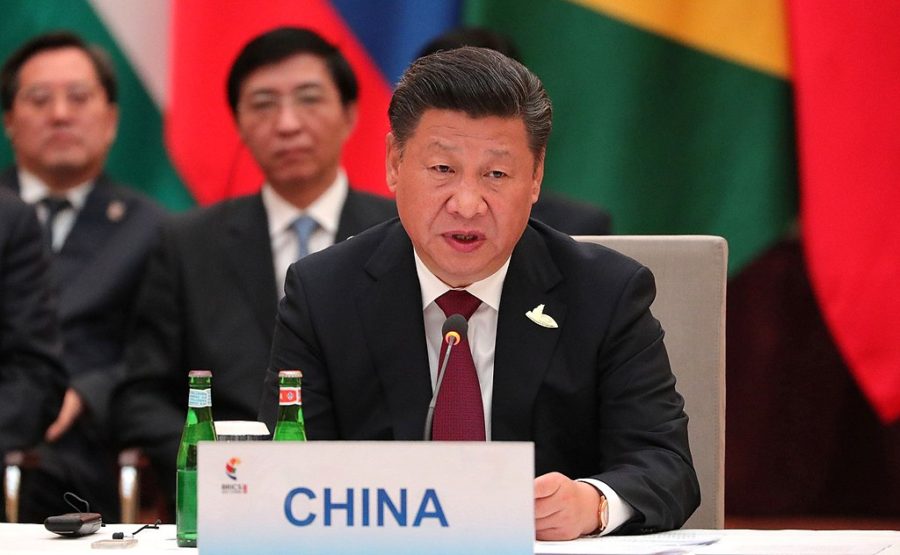
Addressing attendees at the BRICS Business Forum held in South Africa in July 2018, Xi said that “today’s world faces a major change unseen in a century; a new round of technological revolution and industrial change such as artificial intelligence, big data, quantum information and biotechnology has gained momentum, giving rise to a significant number of new industries and new business models, and bringing about a radical change in global development and in production and human life.”
In his opening and closing speeches at the G20 Summit in Hangzhou in September 2016, Xi Jinping again mentioned the “New Industrial Revolution”. China even used the summit to push a G20 New Industrial Revolution Action Plan. “We commit to strengthening communication, coordination and research in the field of the new industrial revolution, in accordance with the commitments made in the Action Plan, to promoting that SMEs benefit from the new industrial revolution, to addressing employment and workforce skills challenges, and to fostering effective protection of intellectual property rights in accordance with multilateral agreements, and new industrial infrastructure.”
In addition to talking about the new industrial revolution in general, the CCP leadership organized a study session on a specific technology: blockchain. On October 24, 2019, at a CCP Politburo study session on blockchain technology, Xi said that the application of blockchain technology plays an important role in new technological innovations. “We must take blockchain as an important breakthrough in the independent innovation of core technology, and focus on making breakthroughs in a series of key technologies.”
The CCP Politburo is composed of the 25 most powerful officials in China. It is hard to imagine that, in any other country in the world, national leaders at that level would show such great interest in a specific new technology.
“Rise of the East and Decline of the West”: An Opportunity to Lead
For China, the new technological revolution is an opportunity to catch up with and eventually surpass Western countries, especially the United States. Li Donghong, deputy director of the Institute for Global Industry at Tsinghua University, explained this view very well: “For the vast majority of developing countries, including China, their goal and efforts to catch up with the world’s leading developed countries never wavered. In fact, new technological revolutions often significantly change the trajectory of industrial and social progress. In many areas, the accumulation of technologies and talents of the previous generation will lose its importance and value because of major technological changes. Therefore, emerging and developed countries are often on the same starting line in many areas; moreover, some of the countries that were previously leaders will have difficulty taking advantage of some of the new opportunities because of path dependence. Emerging powers, however, may be better able to get ahead because they travel light.”
The CCP’s nationalist narrative of the “Century of Humiliation” is an emotional driver of China’s eagerness to seize the new industrial revolution. The “Century of Humiliation” describes the period of intervention and subjugation of the Qing dynasty and the Republic of China by Western powers and Japan from 1839 to 1949. The Chinese believe that for thousands of years, before the First Industrial Revolution, China was among the world’s top in terms of economy, technology and culture.
Starting in the mid-19th century, the Qing dynasty’s policy of closing the country to the outside world caused China to fall behind the West. Between 1839 and 1949, China suffered several military defeats at the hands of foreign powers. During that period, China suffered great internal fragmentation, lost almost every war it fought and was often forced to make major concessions to other nations.
In many cases, China was forced to pay large amounts of indemnities, open ports to trade, lease or cede territories and make other sovereignty concessions to foreign “spheres of influence” after military defeats.
This “Century of Humiliation” shapes the Chinese view of the international system: many believe that a nation’s well-being is tied to its ability to compete on the international stage. There is a famous saying in China: “falling behind makes one vulnerable to attack.” From this perspective, a country’s level of achievement in science and technology is a mark of whether it is “lagging behind”.
After Xi Jinping’s use of the phrase “Rise of the East and Decline of the West” in early 2021, the term was frequently heard in official discourse; this reflects the CCP’s assessment of the shift in the global balance of power. As Jin Canrong, a professor at Renmin University of China, famous for his anti-Western views, explains, “for the past several hundred years, the international landscape was dominated by the West. Now, the West-dominated structure has changed. The West began to age and its own problems multiplied. At a time when Western power has become relatively weak, non-Western countries, represented by China, have risen. The world is bound to move toward an East-West balance.”
“The ‘Western model’ is no longer the only model of modernization, and the socialist path with Chinese characteristics can offer a new alternative. China has achieved preliminary success in modernization in recent years, while its development model is different from the Western model and has its own characteristics. The ‘China model’ and the socialist path with Chinese characteristics are original. The success of the ‘China model’ means that the uniqueness of the ‘Western model’ has been broken.”
From the perspective that the global power landscape has tilted in favor of the East, the fourth industrial revolution is seen as the greatest historical opportunity for the East to surpass the West. Jin Canrong speculated that “after the fourth industrial revolution, it is possible that the productivity of the East will exceed that of the West, or at least match it. This is the most important change unseen in a century; if China seizes the opportunity, it means that the best technology and the best industry for humanity will be in China from then on. Therefore, we must seize the opportunity.”
Xi Jinping also expressed the idea of surpassing the developed world, although not as directly as Jin. At the 2014 conference of the two main Chinese government think tanks, the Chinese Academy of Sciences (CAS) and the Chinese Academy of Engineering (CAE), Xi Jinping said that “the strength of a country cannot be determined by the size of its economy, nor can the strength of a nation be measured by its population or the area of its territory. In modern history, one of the roots of China’s backwardness and defeat is backwardness in science and technology.”
In September 2017, at the Dialogue of Emerging Market and Developing Countries (新兴市场国家与发展中国家对话会), Xi said: “A new round of technological and industrial revolution has generated new engines of growth and brought us development opportunities like never before. By seizing the opportunities, emerging market and developing countries can even get ahead in the game. If the opportunities are missed, the North-South gap and development imbalance will widen further.” [The term “North-South gap” here refers to the economic gap between the developed world and less developed countries, including China.]
At the 2014 CAS and CAE conference, Xi also set out the strategy for competition: “Seizing the greatest opportunity of the new round of scientific and technological revolution and industrial transformation means participating in the new playing fields at the early stage of their construction, and even dominating some of them, so that we can become an important rule-maker of the new competition, and an important dominant player in the new playing fields. Whether our country can take the lead in the future depends mainly on whether we can make real strides in innovation-driven development.”
Optimism in China’s Strength
Why is China confident in its ability to outdo its rivals in the technological arena? Many China scholars have expressed confidence in the country’s ability to compete with the West.
Some mention China’s progress in scientific research and innovation. Xue Lan, a professor at Tsinghua University, wrote: “In terms of R&D investment, statistics from 1990 to 2016 show that China’s investment grew at a high rate and is now approaching that of the United States, which was the first country in investment for many years. China ranks second in the world. In addition, in terms of output, Chinese scholars have published a large number of papers in international English-language academic journals. Since 2007, Chinese scholars have published more papers in these journals than any other country except the United States. Around 2011, the number of papers published in top-level academic journals by China also surpassed that of other countries except the United States. China is now the world leader in the number of patents granted each year. Many of the patents were created by our internationally renowned companies, such as Huawei, Baidu, Alibaba, Tencent, BGI Group, and among traditional manufacturers are Weichai Power, Sany Heavy Industry and Geely. The knowledge acquired by Chinese companies in the international market, that is, the fees paid for the use of international innovation patents, is also huge. China is now the second country, after the United States, in spending on purchasing patent rights.”
Some are optimistic about China’s manufacturing capacity. “At present, China’s industrialization has reached an advanced stage. China’s industrial scale is exceptionally large. Its total manufacturing output surpassed that of the United States in 2010, the sum of the United States and Japan in 2016, and the sum of the United States, Japan and Germany in 2018. In 2018, the growth rate of China’s manufacturing sector was 6.1%, the slowest in 15 years. However, the average growth rate of the United States, Japan and Germany is 0.4%. At this rate, by 2030 China’s manufacturing sector will account for more than 50% of the world.” Professor Jin Canrong boasted that “in 2030, from the perspective of manufacturing, there will be two countries in this world, one called China and the other ‘foreign countries’.”
And some boast of brutal efficiency, claiming that an authoritarian regime is better placed to get things done than a democracy. Li Donghong of Tsinghua University said: “Compared with Europe, the United States, Japan and other developed countries, China has its own institutional advantages. It is able to do great things by gathering all resources under a clear top-level design, to achieve great efficiency across the country in promoting specific projects around a common goal. To this end, while still respecting the leading role of the market in resource allocation, we must make full use of our strength in this regard.”
Jin Canrong also wrote about a specific weakness of the United States in this competition: “The advantage of the United States is its incomparable innovation capacity, and its disadvantage is the hollowing out of industry and the inability of many high technologies to enter the market. From the market’s point of view, no matter how good your technology is, if it cannot become a product and be accepted by the market, it is a piece of garbage. China’s advantage is its ability to turn technology into products acceptable to the market, and this advantage is unique in the world.”
A Whole-of-Government Approach
With the arrival of the new industrial revolution, the world’s major economies actively implemented innovation-driven development strategies, and each drew up its own plan: the United States’ National Strategic Plan for Advanced Manufacturing, Germany’s High-Tech Strategy 2020, Japan’s Alliance for Science, Technology and Industry, the UK’s Industrial Strategy 2050, France’s Industry of the Future and South Korea’s Future Growth Engine Plan.
In this context, in 2013 the Chinese Academy of Engineering invited a group of more than a hundred scholars and experts to study the development trend of the global manufacturing industry, the strategies of developed countries and the situation of China’s manufacturing industry. Two years later, in May 2015, the group completed its work and published a blueprint for Made in China 2025.
MIC 2025, a 30-year program, aims to transform and upgrade China’s manufacturing industry and improve its competitiveness, to move into the first tier of the world’s manufacturing powers. The plan to achieve this goal includes reducing consumption of raw materials, improving labor productivity, reducing environmental impact, boosting technological innovation, optimizing the industrial structure, accelerating the integration of information technologies and expanding international cooperation.
MIC 2025 is a whole-of-government approach.
On June 16, 2015, the State Council of the Chinese cabinet issued a notice to establish a national general office: the Leading Group for Building a Strong Manufacturing Country. Ma Kai, vice premier of the State Council, was named head of the group; the other members come from various ministries and agencies of the cabinet. The main responsibilities of the Leading Group include reviewing and approving policies and major projects, as well as guiding cabinet bodies and local governments.
In addition to the Leading Group, there is also the Strategic Advisory Committee for Building a Strong Manufacturing Country, a government think tank that conducts consultations and evaluations on major decisions in the manufacturing industry.
MIC 2025 consists of five major platforms: the manufacturing innovation center, the smart manufacturing platform, the industrial foundation platform, the green manufacturing platform and the high-end equipment manufacturing innovation platform. Each platform is identified with a series of projects.
In addition to the top-level design of MIC 2025, there are 11 supporting policy documents. These include documents providing guidelines on each of the five platforms mentioned, development guides covering talent recruitment, the information industry, new materials and the pharmaceutical industry, as well as action plans to develop service-oriented manufacturing and to promote quality improvement in equipment manufacturing.
China approved some thirty pilot cities to lead the implementation of MIC 2025 platforms and projects. The central government worked with provincial and municipal governments to create provincial and municipal guidelines for MIC 2025, so that each locality can make full use of its comparative advantages in certain industries.
MIC 2025 aims to make breakthroughs in ten key areas: 1) New advanced information technologies; 2) Automated machine tools and robotics; 3) Aerospace and aeronautical equipment; 4) Maritime equipment and high-tech maritime transport; 5) Modern rail transport equipment; 6) New energy vehicles and equipment; 7) Energy equipment; 8) Agricultural equipment; 9) New materials; and 10) Biopharma and advanced medical products.
It is difficult to estimate how much money goes into MIC 2025. According to a 2017 state media report, China planned to support key MIC 2025 projects with special funds. A 2017 budget guide issued by the Ministry of Industry and Information Technology (MIIT), the key cabinet ministry that carries out MIC 2025, listed more than 100 “key tasks”, each of which was expected to receive funding of between 30 and 50 million yuan ($4.7 to $7.8 million). It is estimated that the total central government financial support for MIC may exceed 10 billion yuan ($1.6 billion).
In addition to financial support from the central government, local governments also pledged financial support for MIC 2025. For example, in 2017, Guangdong province invested more than one billion yuan ($16 billion) in the program. The total amount of local aid for MIC 2025 during the 13th Five-Year Plan period (2016-2020) was estimated at more than 10 billion yuan ($1.6 billion).
The Ministry of Finance and the Banking Regulatory Commission also coordinated financial institutions to provide a range of financial services including loans, investments, bonds and leasing. For example, the China Development Bank was to provide no less than 300 billion yuan ($47 billion) in financing for MIC 2025 between 2016 and 2020.
Conclusion
State media and government documents made it clear that the Chinese Communist Party has always seen the West, in particular the United States, as its competitor in the ongoing industrial revolution. Despite the CCP’s confidence and optimism, many doubts remain about the viability of its plans.
Are the claims that China’s technological progress can catch up with the West realistic?
Does China really have the so-called advantages in R&D growth rate, manufacturing capacity, efficient authoritarian control and top-down resource allocation, and the industry’s ability to bring products to market? Do these advantages persist in the face of the restructuring of the global supply chain and the economic devastation (even within the Chinese economy) induced by the COVID pandemic?
Will China be able to continue growing its economy? How will the country be affected by its looming demographic and energy crises, as well as Xi Jinping’s harsh restrictive measures on the private sector (including the real estate industry) that began in 2021?
Can the state’s whole-of-government approach give a significant boost to indigenous scientific research?
Today’s China faces a very different international environment than ten years ago. After the intensification of the U.S.-China relationship in 2018, at which point the West began to pay more attention to China’s technological ambition, the Chinese government and state media began to avoid using the phrase “Made in China 2025” in official documents and communications. This does not mean, however, that the program was abandoned. Although U.S. sanctions on Chinese companies like Huawei may have derailed the original plan, we have every reason to believe that China is continuing the implementation of the MIC 2025 framework developed in 2015. The CCP will change its tactics and adapt to a new global political and economic landscape; we must not underestimate its persistence in achieving its ultimate goal.
This article was published in China Scope on November 1, 2021.