



China signed a new agreement with leaders of Ibero-America and the Caribbean to tighten ties in nearly every area of society, in what one analyst compared to a plot to “take over” the region.
As part of the agreement, Beijing pledged to supply the region with “civilian” nuclear technology, help develop “peaceful” space programs, build the kind of 5G networks that Washington already warned will be used to spy on people, and inject cheap money, loans and financing for “elaborate development plans”.
China even pledged to build schools and fund Chinese language and “culture” classes, although these institutions have been criticized elsewhere for pushing state propaganda and limiting academic freedom.
READ ALSO: China: The Dictatorship Bans Private Capital in Media
It comes from decades of Chinese investment and development in Latin America and the Caribbean, which has seen hundreds of billions of dollars poured into the region to build critical infrastructure such as ports, roads and power plants in what many believe is an attempt to buy power and influence in America’s backyard.
“There are absolute ambitions for China to become the dominant influence in Latin America,” said Matthew Haydar, a researcher at the Heritage Foundation, following the latest agreement.
“The challenge is broad and there is absolutely a military and security interest there. That threat is growing, and it is a different kind of threat from what we saw with the Soviets,” he told the Washington Examiner.
Professor Evan Ellis of the U.S. Army War College added: “The Chinese do not say: ‘We want to take over Latin America,’ but they clearly set out a strategy of multidimensional engagement that, if successful, would significantly expand their influence and produce enormous intelligence concerns for the United States.”
The agreement, officially the “Joint Action Plan for Cooperation in Key Areas”, was signed last month between China and the Community of Latin American and Caribbean States (CELAC), an alliance of Ibero-American and Caribbean states that encompasses almost every country in the region, including major players such as Brazil, Argentina, Colombia, Venezuela, Uruguay and Chile.
Although light on specifics, it sets out a broad roadmap for relations between China and the countries of the region through 2024, committing them to deepen ties between governments, banks, businesses and educational institutions.
Most of the commitments seem routine, such as promises to preserve the environment, develop green technology and promote equality and sustainability, but some will certainly give Pentagon minds pause.
The first is the commitment to exchange nuclear technology and promote “relevant practical projects”, including training nuclear scientists to “bring into play the advantages offered by nuclear technology and energy”.
The agreement specifies that it will be “peaceful” and elsewhere commits the parties to pursue “nuclear disarmament”, but it will almost certainly cause concern because the technology used to enrich nuclear fuel can be repurposed to make weapons-grade material and for use in bombs.
In recent months, Washington has also issued increasingly frequent warnings about Chinese companies that assist the military, and is likely to fear that any civilian nuclear venture established in South America would be used for dual purposes.
Likewise, China’s promise to help develop space programs for “peaceful space exploration” may also be cause for concern.
In the past, Beijing tried to pass off the launch of spy satellites as “communication” craft, and recently denied the accusation of having tested a hypersonic nuclear weapon in orbit, saying that in reality it was a civilian spacecraft intended for “peaceful space exploration”.
As part of the agreement, the two sides pledge to cooperate on “ground infrastructure construction” to support space programs, which raises the possibility that such technology could soon be launched, controlled or monitored from America’s doorstep.
And this is not the only area where Chinese and South American technology is likely to combine. The agreement also promises greater cooperation in “digital infrastructure, telecommunications equipment and 5G”.
The United States has been embroiled in a power struggle with China over the deployment of 5G technology for years, ever since it became known that Beijing was leading the race to build the world’s new information networks.
Mike Pompeo, former U.S. Secretary of State, pushed hard in the last years of the Trump administration to persuade Western nations and U.S. allies to get rid of the technology, warning that it would be used to spy on users.
South American countries were at the epicenter of the battle, trying to appease both Beijing and Washington. Jair Bolsonaro, the Brazilian president and a close Trump ally, initially pledged to exclude Huawei, one of China’s biggest tech companies, from running part of its network, only to backtrack when Trump left office.
According to the text of the agreement, it is a struggle that looks set to continue for some time.
China and the Ibero-American states also agreed to cooperate directly between their militaries, apparently in order to fight terrorism and dismantle organized crime networks.
Both sides said they “will share knowledge, policies, technologies and experiences” to confront threats, suggesting a certain level of cooperation and information exchange between their militaries and police forces.
Other promises seem to be a continuation of infrastructure projects already underway in the region, many of them built as part of China’s trillion-dollar Belt and Road initiative.
These include deepening ties in trade and financial markets, including investments and loans for “elaborate development plans”, and help with the “green energy transition” by building new power plants.
China also pledged to help with oil, gas and mining exploration, although it said that green projects will take priority over fossil fuels.
A final promise that may be worrying is that China will build so-called “Confucius Institutes” and classrooms, which are schools and educational programs aimed at teaching Chinese language and culture.
But the institutions have been accused of spreading false information and Chinese state propaganda, even by one of the Chinese officials themselves, senior Chinese Communist Party (CCP) leader Li Changchun, who once described the schools as “an important part of China’s overseas propaganda apparatus”.
Washington designated the headquarters of the Confucius Institutes in the United States as a Chinese foreign mission, meaning it is owned or controlled by the state, and Mike Pompeo accused the schools of “advancing Beijing’s global propaganda and malign influence campaign”.
The agreement is just the latest in a long series of loans, trade deals, construction projects and other investments in Latin America and the Caribbean that have seen Beijing flex its growing economic muscle as America’s strength wanes.
Since 2005, China’s three largest state investment banks have lent some $140 billion to Latin American countries to pay for everything from nuclear power plants to dams, roads, railways, ports and telephone networks.
Billions more, nobody knows exactly how many, were lent through commercial bank contracts, private financial initiatives and other opaque, hard-to-trace arrangements, although researchers found that they sometimes eclipse the deals made on the books.
Meanwhile, Chinese trade with Latin America soared more than 25-fold, from $12 billion in 2000 to $315 billion in 2020, as almost half of the countries in the region saw their main trading partner change from the United States to China, including three of the four largest economies: Brazil, Argentina and Colombia.
All of this gives China leverage that it uses to get its way on the international stage, from winning votes at the UN to isolating its enemies, especially Taiwan, as Beijing demanded that countries cut diplomatic ties with the island before handing them money.
Still more countries have joined China’s Belt and Road initiative, a trillion-dollar global construction project that aims to improve trade networks and infrastructure that will be beneficial to China in the long run.
Among the most prominent partners are Venezuela, which also owes China heavily, Ecuador and Panama, home to the extremely valuable Panama Canal, which was originally built with U.S. funding.
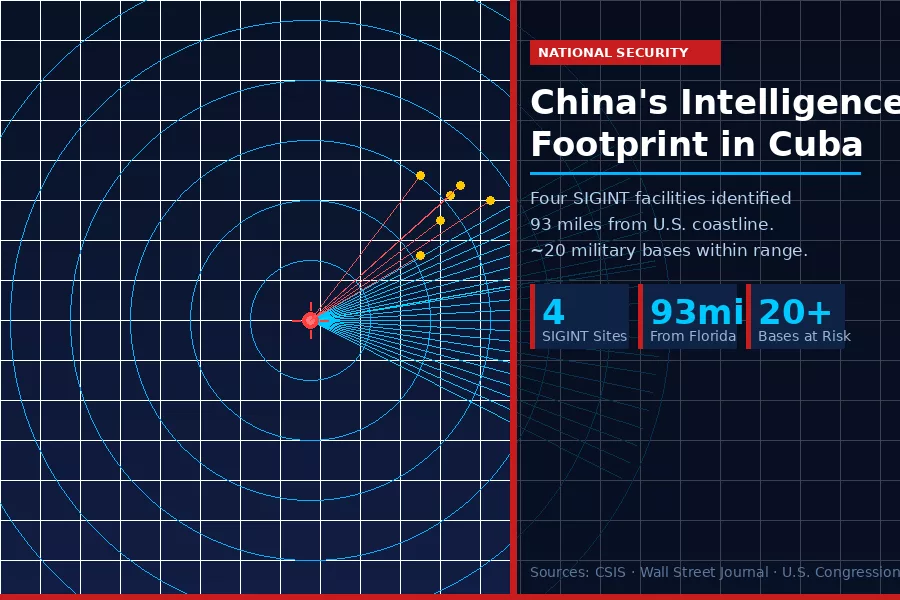
Cuba is another country that joined the Belt and Road, and this week announced it will accept China’s help to modernize its power grid with a focus on renewable energy.
Carlos Miguel Pereira, Cuba’s ambassador in Beijing, made the announcement after a conference on energy for Belt and Road members, inviting Chinese companies and investors to participate.
But the United States has begun to fight back. In September of this year, Biden sent diplomatic teams to South America with the aim of taking his Build Back Better initiative, which began as his plan to rebuild America after Covid, global under the label Build Back Better World, or B3W.
The “listening tours” were designed to identify projects in which the United States could participate, offering to outdo China with higher-quality products and a better delivery record.
For example, China helped Ecuador build two hydroelectric dams over the last decade, but the Coca Codo Sinclair dam has since had major problems, including oil spills and cracks.
“Very few [Chinese] projects make economic sense and they often have very poor labor and environmental standards,” a Biden administration official said at the time.
A B3W event is planned for early next year at which more details will be announced, including project financing, although the amount of money that will be committed has not yet been announced.
This article was originally published in the Daily Mail on January 3, 2022
Author: Chris Pleasance