


The energy sector was one of the first to begin a process of globalizing its value chain. Since the start of the Industrial Revolution in the 19th century, the need for fossil fuels forced countries without resources to import them and others, rich in those raw materials, to export them, earning large profits as the industrialization process progressed in the more advanced countries.
Although these resources are not always in the hands of nations with political regimes considered “stable” and/or “reliable” from a Western democratic point of view, this scheme has been maintained for more than a century and, what is more, it has spread to many of the supply chains for goods, focusing mainly, where applicable, on the lowest labor cost (“cheap labor-rich” countries, another fuel).
All of this has in fact brought about a progressive global geopolitical reordering throughout the 20th and 21st centuries, with the incorporation as main players of some nations rich in certain fossil fuels (Saudi Arabia, Qatar, Norway, etc.) or in cheap labor (mainly China) that until then had a secondary role on the international stage.
READ ALSO: Energy Crisis in China: How Does It Affect Spain?
However, the pandemic has precisely brought to light inconsistencies that were already suspected and that could imply a more serious problem than they initially seem. It is very relevant that between 2019 and 20201 global gas production fell by more than 120 bcm [billion cubic meters] while the reduction in consumption was only about 80 bcm. That caused a reduction in the volumes of gas stored around the world.
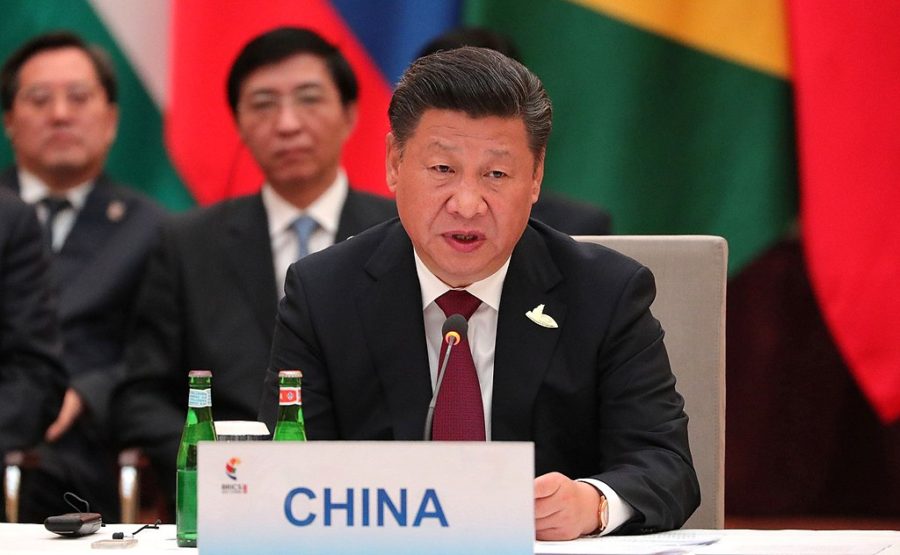
In these months of 2021, the increase in economic activity compared with last year converges with the pressing need to rebuild gas reserves ahead of the winter season in the northern hemisphere. In China’s case, it is estimated that, in the first half of 2021, natural gas consumption grew by 15.5%. This growth can only be sustained by resorting to massive imports. Moreover, if China wants to reach its emissions peak before 2030 and carbon neutrality in 2060, it has no choice but to use gas as a transition energy to replace coal: its pressure on global gas demand will be permanent for at least the next 15 or 20 years.
One of the most widespread explanations for the current situation, with very expensive energy prices alongside shortages of key products such as microchips, containers, cardboard or paper, refers to mismatches between supply and demand caused by the restart of economies worldwide after the standstill caused by the COVID-19 pandemic. In fact, from a purely descriptive perspective and regarding the impact of price-setting mechanisms, we agree.
However, why did gas production fall 120 bcm during the first year of the pandemic while consumption only fell 80 bcm? Why is Russia speculating with the amount of gas supply to northern-central Europe while it has just confirmed a 9% increase in supply to China? Why has Algeria, Spain’s main supplier, decided to close one of the gas pipelines to Spain, “guaranteeing” supply only through LNG (liquefied natural gas) ships? Is it pure economic speculation or are there geopolitical interests behind it?
In reality, the energy sector acts as a leading indicator of other supply chains because, in fact, many of them depend on its cost in order to produce competitively. In Europe’s case, the main electricity markets work on a marginalist basis, in which the most expensive energy (gas in many cases) sets the price of the other technologies. Currently, reserves stand at 72% instead of the 92% that was the average of the previous five years at this time.
In Asia, however, Japan and South Korea have secured their LNG inventory for the winter season by pushing as hard as possible the long-term contracts they have in force. In China’s case, at least 54% of energy is still produced with coal, but the transition from coal to gas has made China surpass Japan as the top LNG importer this year. It must also be considered that intensive gas consumption extends to the heating systems of the country’s northern provinces such as Tianjin, Hebei and Shandong. Therefore, depending on the winter in Asia and in Europe, the price of gas will behave accordingly from spring onward. If the winter is not very cold, the price will fall from summer in Asia and Europe because reserves will not have been exhausted, but if the winter is very cold the situation will be much more complicated in Europe.
As we said, Russia’s decision not to exceed the commitments made to Europe while increasing gas supply to China by 9%, together with Algeria’s action of replacing 20% of the supply to Spain through the pipeline that passed through Morocco with LNG ships (with the risk of losing them in an eventual price war), whether or not it is a coordinated action, undoubtedly weakens the European Union (EU).
We do not yet have enough information to assess whether, in this particular energy crisis, it is mainly speculation or something more serious, but it is certain that the decarbonization strategy the EU is pushing aims not only at the environment but also at achieving the energy independence necessary to avoid suffering situations like the current one. Now, the focus also remains on China as the main nation benefiting from the offshoring of goods supply chains while using the most polluting fuels and not respecting the human rights of local labor.
Its intensive energy consumption is due, to a large extent, to the offshoring of factories worldwide, which paradoxically is making it harder for the nations that offshored their factories to access those energy resources. We will talk about globalization and its paradoxes in the next article.
References:
[1] Nemesio Fernández Cuesta, https://blogs.elconfidencial.com/espana/por-si-acaso/2021-10-13/crisis-gas-invierno-descontento_3305314/