



On May 1, Russian television presenter and news executive Dmitry Kiselyov, often called “Putin’s mouthpiece,” urged the Russian president to launch the Poseidon underwater drone, also known as ‘Status-6,’ which carries a “100-megaton nuclear warhead.” The explosion, Kiselyov claimed, could generate a 500-meter wave that would reach halfway up Britain’s highest peak, Scafell Pike, and “plunge the United Kingdom into the depths of the ocean.”
“That tsunami would also carry extremely high doses of radiation,” Kiselyov stressed. And he added, “when it hits Britain, it will sweep everything away and everything will be turned into a radioactive desert, totally useless. What do you think?”
“A single launch, Boris, and England is finished,” Kiselyov added, addressing British Prime Minister Boris Johnson.
READ ALSO: China: “No One and No Force” Could Prevent It From Taking Taiwan
Kiselyov’s threat came after one made on April 28 by Alexei Zhuravlyov, chairman of the Rodina party, an ally of Putin. On the program 60 Minutes on Russian TV’s Channel 1, Zhuravlyov urged Putin to nuke the United Kingdom with a Sarmat, the longest and heaviest missile on the planet.
The program said a missile launched from the Russian enclave of Kaliningrad would take 106 seconds to reach Berlin, 200 to reach Paris and 202 to hit London.
In NATO, the Sarmat is called Satan II.
Putin himself joined the party. Just before sending his troops into Ukraine, he warned of “consequences you have never faced in your entire history.” On February 27 he put his nuclear forces on high alert. On March 1 he brought out his ballistic missile submarines and land-based launchers in what was called a military exercise. On the 4th, the Russian defense minister announced “electronic launches” in Kaliningrad of the Iskander ballistic missile, which can carry nuclear warheads.
Russia has a nuclear doctrine known as “escalate to de-escalate,” in other words “escalate to win,” referring to the use of nuclear weapons, or the threat of their use, in the early stages of a conventional conflict.
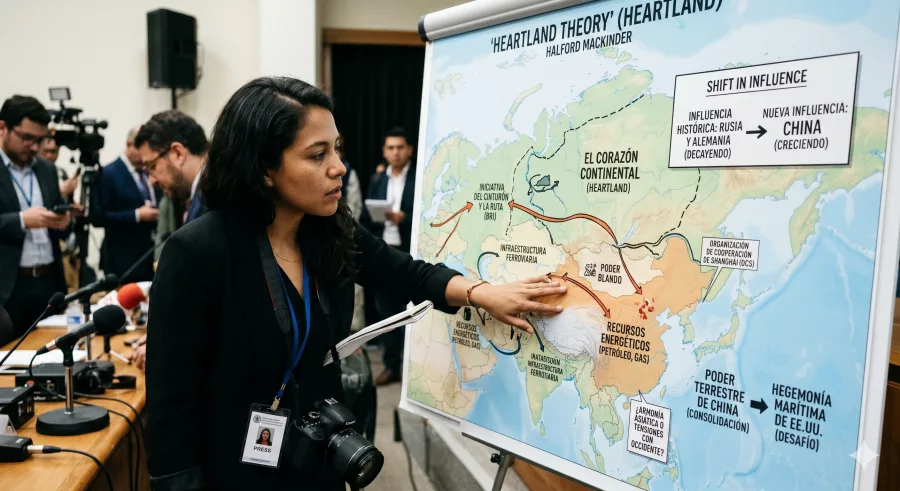
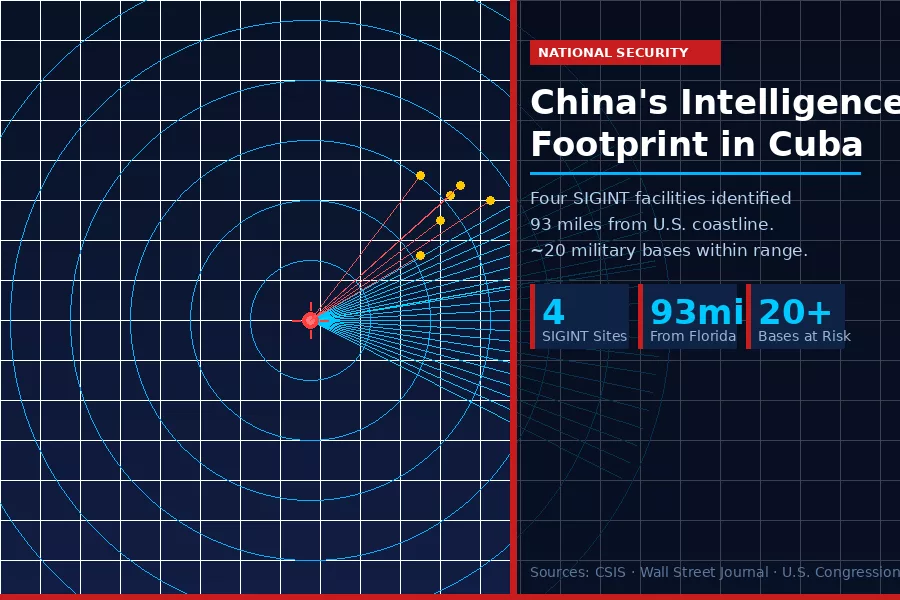
China, which on February 4 issued a joint statement with Russia in which Beijing and Moscow proclaimed that their partnership has no limits, has spent this entire century periodically issuing unprovoked threats to destroy the cities of states that offended it in some way.
Thus, in July last year it threatened to attack Japan with nuclear weapons for its support of Taiwan. And in September it issued a similar threat against Australia for its partnership with the U.S. and the UK in the Aukus pact, for the stability of the region. In March, China’s Defense Ministry promised “the worst consequences” to countries that helped Taiwan, which seemed a threat aimed especially at Australia.
This month, North Korea said it could use nuclear weapons both in retaliation for an attack and to launch an attack directly.
It is not a good sign that Russia, China and North Korea are threatening to use the most destructive weaponry at the same time.
Why are the most dangerous regimes on the planet, such as China, Russia and North Korea, making these threats?
First, Putin showed that such warnings intimidate. Peter Huessy of the Hudson Institute, who spoke to me in March about escalating to win, assumes that nuclear threats “will serve as coercion for the enemy to submit and not fight.” Since Western democracies backed down and are clearly not fighting in Ukraine, Beijing and Pyongyang want to achieve similar successes.
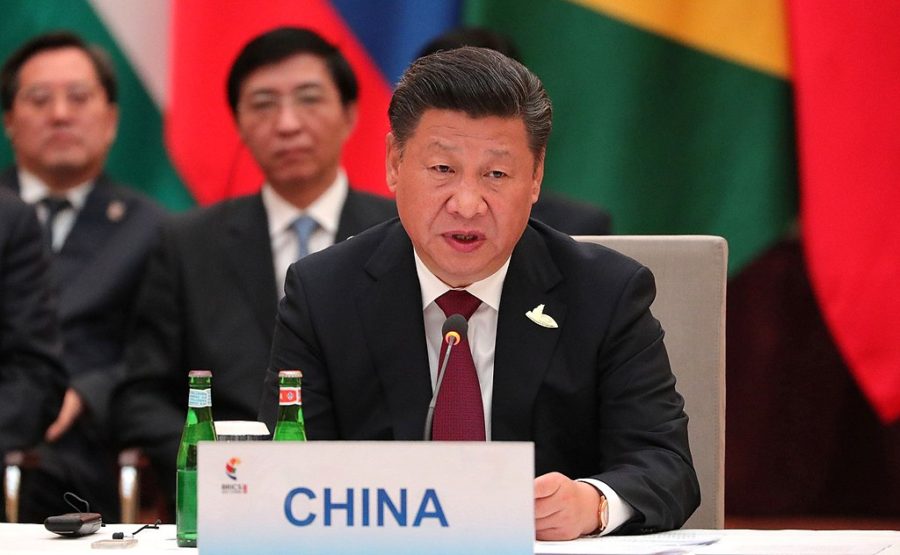
Second, Putin and Chinese ruler Xi Jinping may be making these threats because they do not respect the nations they perceive as enemies. “The shameful withdrawal from Afghanistan and the unwillingness to effectively help Ukraine, from the guarantees we gave in 1994 but especially in the last year, led nuclear-armed enemies to multiply their threats against the U.S. and its allies,” Huessy, president of GeoStrategic Analysis, told Gatestone earlier this month. “They perceive that the U.S. is increasingly weak.”
“Like Vladimir Putin, the Chinese Communist Party lost its fear of American power,” Richard Fisher of the Virginia-based International Assessment and Strategy Center told me shortly after Russia’s invasion of Ukraine. “Chinese nuclear threats reflect the Party’s arrogance in the face of perceived U.S. weakness, the risk posed by the lack of an American nuclear deterrent in the region and the incompetence of American leadership.”
Third, there are domestic considerations that may facilitate the making of such threats. Many say the most dangerous moment since World War II was the Cuban Missile Crisis in October 1962. Perhaps even more so was the situation at Checkpoint Charlie in Berlin in October 1961. Both Kennedy and Khrushchev knew that a nuclear exchange would never happen. The question today is whether Putin and Xi know it too. Perhaps they do not.
These threats may reveal that both share a besieged-bunker mentality. Both Russia and China live under regimes in trouble, which means their leaders have a low tolerance for risk.
Whatever the reasons underlying the threats, Putin and Xi have told everyone what they intend to do. Unfortunately, Western leaders are determined not to believe them.
In response to the Russian threats, President Biden said on February 28 that the American people should not worry about a nuclear war. On the contrary: there are plenty of reasons to be worried.
Western presidents and prime ministers almost always ignore nuclear threats, so as not to give them oxygen. Unfortunately, what was achieved by this is that the threateners redouble their threats. The longer the international community takes to confront the Russians, Chinese and North Koreans, the more dangerous the confrontations will be.
As things stand, it seems the world is rushing toward the worst moment in history.
“A nuclear war cannot be won and must never be fought,” Biden said last June. It can. Perhaps Putin, who signed on to those words alongside the American president, thinks he can fight one and even win it.
This article was published in Gatestone on May 29, 2022.
Author: Gordon G. Chang