


Last October, the People’s Republic of China (PRC) convened, via videoconference, the first foreign ministers’ conference with nearly 20 Pacific island states. On December 3, the Chinese quickly followed this initiative by establishing the “Emergency Supplies Reserve of Pacific Island Countries”.
China’s diplomatic offensive in the South Pacific suggests yet another effort to replace the United States as the world’s leading superpower and install its authoritarian values in its place.
All the Pacific island nations invited to the foreign ministers’ conference had already adopted Beijing’s One China Policy. Some of these countries had diplomatic ties with Taiwan, but apparently allowed themselves to be seduced by Beijing’s offers of financial loans, investments and corrupt practices. These sometimes included direct interference in the internal political affairs of these islands, threatening the effectiveness of their government institutions. While the PRC has not yet established a formal pro-China organization to rival the Pacific Islands Forum (PIF), which began in 1971, the PRC’s challenge is clear. The Chinese Communist Party (CCP) accelerated its campaign to isolate Taiwan from the existing international order, offering bribes in some of these poor islands to leading figures to break with Taipei. Today, only fifteen nations have formal diplomatic relations with Taiwan, and four of them are in the South Pacific: the Marshall Islands, Nauru, Palau and Tuvalu.
READ ALSO: China Wants to “Take Over” Ibero-America
While the territories of the Pacific islands are small and the combined population of these countries approaches only 2.3 million, their territorial area covers approximately 15% of the world’s surface. China’s incentives to increase its influence in this region appear both strategic and economic. The South Pacific contains some of the world’s best-endowed fishing regions. China’s fishing fleet is the largest in the world. China catches about 20% of the world’s catch and consumes about 40% of its seafood.
CCP strategists would welcome any agreement on the Pacific islands that allowed for a Chinese military base or the offer of a dual-use port facility for China’s growing navy. If Chinese warships could gain greater access to the island states’ port facilities, China’s naval assets could disrupt the free passage of U.S. naval vessels to logistically supply its allies in the Pacific Ocean during a crisis. China could possibly be in a position to interfere with major commercial sea lanes in the Pacific.
Militarily, the Chinese People’s Liberation Army (PLA) Air Force and Navy could leap over the first and second of the so-called string of pearls, chains of coastal islands in the South China Sea and the Indian Ocean. To achieve this, China could defy any effort by Free World allies to restrict the Chinese exit of its warships to the open sea. Chinese expansionism in the Pacific, if unchecked, could spell the doom of any American effort to establish a defense perimeter of the QUAD nations, made up of India, Japan, Australia and the United States, against the People’s Republic of China in the Pacific Ocean.
Global attention focused on this region in early November when several days of riots consumed parts of the city of Honiara on the island of Guadalcanal in the Solomon Islands. The causes of the riots are several, among them ethnic tensions that have existed for decades between Melanesian, Polynesian, Micronesian and Chinese citizens. Another is the existence of bitter political partisanship within the archipelago state. This internal rivalry is personified by the government of Prime Minister Manasseh Sogavare of the island of Guadalcanal and his main opponent Daniel Suidani, of the island of Malaita. Sogavare survived a no-confidence vote earlier this month following the riots.
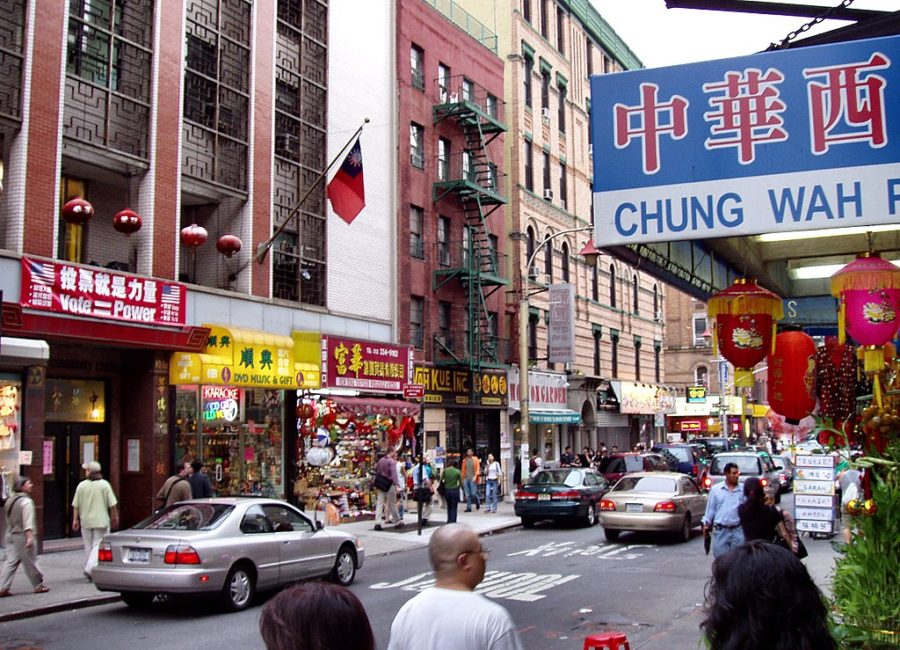
The immediate cause of the recent riots is the perception among many Solomon Islands natives of the corrupting influence of enormous sums of money dispensed by communist China, which meant massive interference in the Solomons’ internal politics. Suidani claimed that in 2019 PRC agents offered Prime Minister Sogavare a $100 million loan to switch his allegiance from Taiwan, with which the Solomon Islands had had diplomatic ties for 36 years, to communist China. Suidani also alleges that mainland Chinese agents provided computers and cars to other minor politicians. The protesters’ anger focused on Honiara’s Chinatown, where many buildings were destroyed by arsonists. Sogavare’s opening toward Beijing led to an influx of Chinese citizens, who were accused by islanders of being arrogant and taking jobs from natives. Troops and security personnel from several nations pledged to help restore order in the Solomon Islands. Countries in the region, Australia, New Zealand, Papua New Guinea and Fiji, sent troops and security personnel to the Solomons, imposing a curfew to prevent further unrest.
Kiribati is another Pacific island state that broke relations with Taiwan in 2019. Current president Taneti Maamau was elected in the 2018 national elections on a pro-China platform. The Chinese promised to restore the airstrip on Canton Island, which served as a heavy bomber base for the Allies against Japan in World War II. The Chinese communists’ incursion will complicate U.S. space and missile tracking operations on the island.
In Fiji, communist China displayed its contempt for conventional diplomatic behavior by disrupting a host-country celebration in honor of the 109th National Day of Taiwan on October 8, 2020. Chinese diplomats started a melee that ended with an injured Taiwanese trade representative in the hospital. Although Fiji recognizes Beijing’s “One China Policy” and has formal diplomatic ties with the PRC, those concessions did not stop Beijing’s diplomats from behaving aggressively.
The aggressive behavior of Chinese diplomats, which demonstrates their disdain for the sovereignty of Pacific island states, was also evident at the Asia-Pacific Economic Cooperation (APEC) summit in Papua New Guinea (PNG) in November 2018. The Chinese delegation demanded a private audience with PNG’s foreign minister. When the delegation was told this would violate APEC regulations on transparency, Chinese diplomats tried to burst into the office of PNG’s foreign minister.
China’s bullying tactics against the sovereignty of Pacific island states also extended to the maritime dimension. Palau, an archipelago state of some 340 coral islands and atolls, is the last member of the “U.S. Trust Territories” in the Pacific Ocean to become independent, in 1994. Palau signed a Compact of Free Association with the U.S. that stipulated this country is responsible for its defense until 2044. Despite this status, Chinese fishing boats illegally entered Palau’s maritime economic zone, leading Palau’s Coast Guard to seize two boats last December. Palau, which still maintains ties with Taiwan, rejected China’s offer of funding for a gigantic fish-processing plant on its territory.
Vanuatu, which has had relations with China since 1982, also suffered a Chinese fishing violation of its maritime economic zone. Two boats, the Dong Gong 13 and the Dong Gong 16, were seized in an area near Australian sovereign waters. The Chinese fishermen were then temporarily detained in Vanuatu’s capital, Port Vila. Rumors persist in Vanuatu that the Chinese plan to transform a remote wharf in Luganville on the island of “Espiritu Santo” into a military base.
China is even exploiting the negative impact of climate change on the low-lying islands of the South Pacific, where ocean waters are rising, supposedly because of global warming. The Chinese government offered to create artificial islands for Tuvalu. The highest point of the country’s nine islands is only 4.5 meters above sea level. Despite the appeal of this temptation, Tuvalu rejected the proposal. Instead, Tuvalu’s prime minister, Kausea Natano, proposed a cooperation pact with all the Pacific island states that still maintain ties with Taiwan.
Nauru, a Pacific island state with barely 12,000 inhabitants, also had the temerity and prudence to reject a Chinese proposal. China, under the banner of Chinese President Xi Jinping’s Belt and Road Initiative, offered to improve the country’s deficient communications infrastructure by offering to lay submarine communication cables. Instead, Nauru maintained its ties with Taiwan and asked the Asian Development Bank and Australia for help to develop the project.
The Marshall Islands give the U.S. an opportunity to put an end to another example of China’s accelerated effort to project its power in the South Pacific. The United States’ “Compact of Free Association” with the Marshall Islands will be renewed in 2023. Marshall Islands leaders have pushed for the State Department to update the agreement with a few billion U.S. dollars to compensate islanders for the health and environmental depredations resulting from the storage of nuclear waste, as well as for the harmful effects of years of atomic testing in the region. The United States also has aerospace facilities and information-gathering nodes in the Marshall Islands. Several U.S. congressmen recently sent a letter of concern to National Security Advisor Jake Sullivan regarding the dispute. Hundreds of Marshallese reportedly still have adverse health conditions attributable to the atomic explosions. Some congressional representatives introduced a Blue Pacific Act, which has bipartisan support from the first Pacific Islands Caucus of the House of Representatives. If enacted, the law would protect U.S. military, economic and strategic interests throughout the South Pacific region.
The intensity of the Chinese Communist Party’s drive to inherit the mantle of American superiority in the Pacific, acquired by the United States at great sacrifice in World War II, clearly shows that Beijing’s ambitions go beyond the reunification of Taiwan with the Chinese “Motherland”.
China’s aggressive and persistent diplomatic offensive to win over the entire constellation of once pro-Western South Pacific mini-states suggests once again a determined desire to emerge as the dominant power in the Pacific region, supplanting the United States and its free and independent allies, along with annexing the rest of the world. The Chinese Communist Party reportedly plans to achieve this within the next 30 years, by 2049, the centenary of the People’s Republic of China.
When will the West, public officials and private companies, stop financing China’s hostile takeover?
This article was originally published in Gatestone on January 3, 2022
Author: Lawrence A. Franklin