

The Chinese military said it conducted more drills near Taiwan as a group of U.S. lawmakers visited the island claimed by China and met with President Tsai Ing-wen, who said her government was committed to maintaining stability.
The five U.S. lawmakers, led by Senator Ed Markey, arrived in Taipei on an unannounced visit late Sunday, the second high-level group to visit after House Speaker Nancy Pelosi in early August, which triggered several days of Chinese war games.
The Chinese military unit responsible for the area adjacent to Taiwan, the Eastern Theater Command of the People’s Liberation Army, said it organized joint multi-service combat readiness patrols and combat drills at sea and in the airspace around Taiwan on Monday.
The maneuvers were “a severe deterrent to the U.S. and Taiwan continuing to play political tricks and undermining peace and stability in the Taiwan Strait,” it added.
China’s Ministry of Defense said in another statement that the lawmakers’ trip violated China’s sovereignty and territorial integrity and “fully exposed the true face of the United States as a ‘spoiler’ and saboteur of peace and stability in the Taiwan Strait.”
“The Chinese People’s Liberation Army continues to train and prepare for war, resolutely defends national sovereignty and territorial integrity, and will resolutely crush any form of separatism and foreign interference of ‘Taiwan independence.'”
The theater command said the exercises took place near Taiwan’s Penghu islands, which lie in the Taiwan Strait and are home to an important air base, and showed a video of the area near the islands taken by a Chinese air force aircraft.
Tsai, who met with the lawmakers in her office, said China’s maneuvers greatly affected regional peace and stability.
“We are working closely with international allies to closely monitor the military situation. At the same time, we are doing everything possible to let the world know that Taiwan is determined to safeguard stability and the status quo in the Taiwan Strait,” she said in a video provided by the presidential office.
Markey told Tsai that “we have a moral obligation” to do everything possible to avoid unnecessary conflict.
“Taiwan has shown incredible restraint and discretion in difficult times,” he added.
Low key
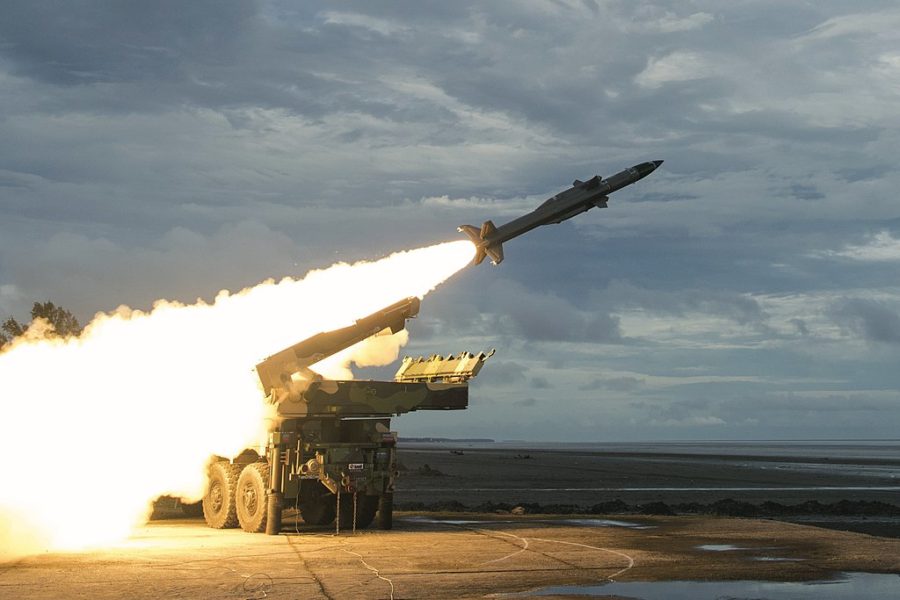
Pelosi’s visit enraged China, which responded with test launches of ballistic missiles over Taipei for the first time and abandoned some lines of dialogue with Washington, including military talks and talks on climate change.
However, this trip was much more low-key than Pelosi’s, as Tsai’s meeting with the lawmakers was not broadcast live on her social media pages, which is the usual practice when high-level foreign guests come.
The group left Taiwan late Monday afternoon, and only then did the presidential office release images of the meeting with Tsai.
It was not immediately clear where they were going.
The de facto U.S. embassy in Taipei said they also met with Foreign Minister Joseph Wu and members of the Foreign and Defense Committee of Taiwan’s Parliament.
“Authoritarian China cannot determine how democratic Taiwan makes friends,” Wu said on Twitter about their meeting.
The United States has no formal diplomatic ties with Taiwan, but is bound by law to provide the democratically governed island with the means to defend itself.
The Chinese Communist Party (CCP) has never ruled out the use of force to bring Taiwan under its control. Taiwan’s government says the People’s Republic of China has never governed the island, and therefore has no right to claim it, and that only its 23 million inhabitants can decide its future.
Taiwan’s Premier Su Tseng-chang said they would not be intimidated by China’s response to these visits from foreign friends.
“We cannot sit idly by because there is an evil neighbor next door, nor stop daring to have visitors or friends come,” he told reporters.
This article was originally published in The Economic Times | News