

On April 12, the Chinese edition of The Epoch Times published an article on the effect of the Russia-Ukraine war on China’s “Belt and Road” program. Almost seven weeks have passed since Russia’s invasion of Ukraine. The war has seriously affected several key countries along the Chinese Communist Party’s (CCP) Belt and Road and accelerated the deterioration of its $4 trillion global strategic plan, implemented over almost a decade.
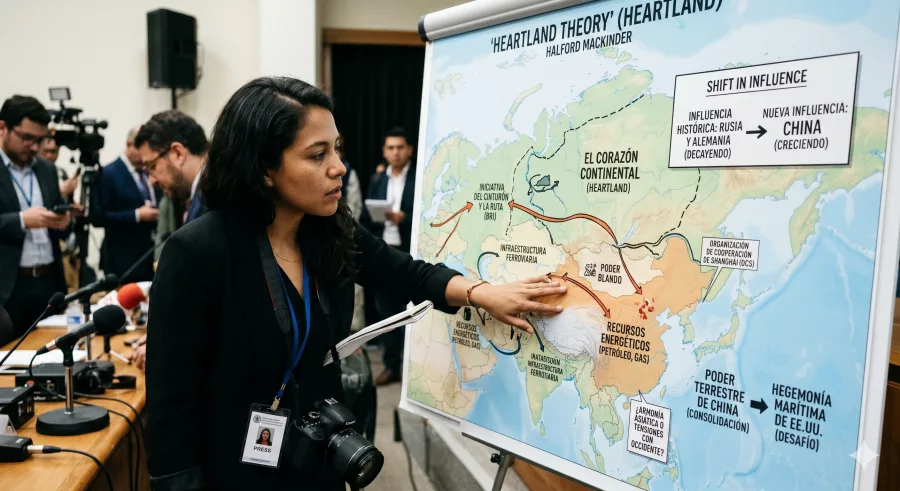
CCP General Secretary Xi Jinping proposed the “Belt and Road” initiative in 2013. It was a global strategy that involved economic penetration of other countries, complemented by technological control. It spread to 149 countries and regions around the world. It consists of two parts. The first is the “Belt”, which refers to the “Silk Road Economic Belt” that extends over land through Central Asia, Central and Eastern Europe, to Western Europe. The second is the “Road”, which refers to the “Maritime Silk Road” that runs through the South China Sea, the Indian Ocean and then west through Southeast Asia, South Asia, the Middle East and Africa, until it reaches Europe.
READ ALSO: Biological Labs or Biological Weapons Labs?
Although it is a key component of the CCP’s “Belt and Road” toward Europe, Russia cannot serve as a key transit point for Chinese containers to Europe because of the extensive sanctions imposed by the United States, Europe and other Western countries. Ukraine enjoys an excellent geographic position, located in the center of Europe. It is an essential route for the CCP to promote “Belt and Road” toward European countries. Ukraine is also an important source of energy, food, military equipment and technology for China. Currently, the war is having a “heartbreaking” effect on Ukraine. Other countries along the “Belt and Road,” such as Belarus, Poland and Romania, were also severely affected by the Russia-Ukraine war. Belarus was the target of a series of collateral sanctions for siding with Russia in this war.
The Russia-Ukraine War Forces a Detour of the China-Europe Route
The China-Europe train is an important land freight route between China and Europe, with three routes passing through Kazakhstan, Russia, Belarus and Poland to enter Europe. The Chinese official outlet Economic Daily reported on March 31 that the China-Europe train was heavily affected by the Russia-Ukraine war. As a result of the sanctions and embargoes imposed by the United States and the West on Russia, sometimes even on transports to Belarus, China-Europe trains had to adjust their routes to avoid Russia, Belarus and Ukraine. Trains returning to China from those places face the problem of empty containers in the medium and long term. In addition, the removal of Russian banks from the ‘Society for Worldwide Interbank Financial Telecommunication’ (SWIFT) caused difficulties in settling trade with Russia.
The CCP’s poor performance in the Russia-Ukraine war, which clearly favors the Russian side, gave Ukraine and other Central and Eastern European countries a clear understanding of the CCP, and that may lead Ukraine to refuse to be a pawn of “Belt and Road” after the war. Other European countries are also likely to reconsider their cooperation with the CCP and distrust its infiltration. Therefore, the CCP’s “Belt and Road” will meet its Waterloo in the countries of Central and Eastern Europe.
Sri Lanka, the Hub of “One Road”, Is in a Serious Economic and Political Crisis
Meanwhile, Sri Lanka, a key hub of the CCP’s “One Road”, is facing its worst economic crisis since independence in 1948, aggravated by the Russia-Ukraine war, which hit the country’s tourism and tea export industries, which depend on Russia and Ukraine. World Bank data show that Sri Lanka has a total of $35 billion in foreign debt, of which China holds about $6 billion and is Sri Lanka’s largest creditor.
Sri Lanka’s economic crisis began with the debt trap of the CCP’s “Belt and Road”, in which Chinese companies build infrastructure such as ports, airports and railways by taking on significant debt to China. To pay off the enormous debt, in 2017 Sri Lanka was forced to lease the important strategic port of Hambantota in the Indian Ocean to China for 99 years at a cost of $1.1 billion. Lately, the country’s economic crisis has become a political crisis.
“Belt and Road” Obstructed in the Initiative’s First Two Countries
Indonesia, the first country to start the CCP’s “Maritime Silk Road”, emphasized neutrality and non-alignment. However, in recent years, Indonesia has begun to feel threatened by the CCP’s expansion and its growing influence in the South China Sea and Southeast Asia. Indonesia has also suffered greatly from the CCP’s “Belt and Road” project. Its 142-kilometer high-speed rail project between Jakarta and Bandung, which is being built by a CCP state-owned company, has not only been considerably delayed, but also faced a cost overrun of $2.47 billion.
Kazakhstan, the first country to start “Belt and Road” over land, is a key hub for the Classic China-Europe Train, a key land route for trade between China and Europe. Earlier this year, social unrest broke out in Kazakhstan. It recently faced continued rises in wheat and flour prices due to drought and the suspension of grain exports to Russia. A food crisis could unleash discontent among the local population.
Article published in China Scope on April 14, 2022.