


On March 25, the Solomon Islands announced that they were “expanding” security agreements, “diversifying the country’s security partnership, including with China.”
The announcement was defensive. The day before, opponents of a security pact with China leaked what was called a “draft” of the agreement. The government of Prime Minister Manasseh Sogavare did not confirm the authenticity of the leaked document, but observers believe that version is meant to be final. Australia, which expressed “great concern,” confirmed the draft as authentic.
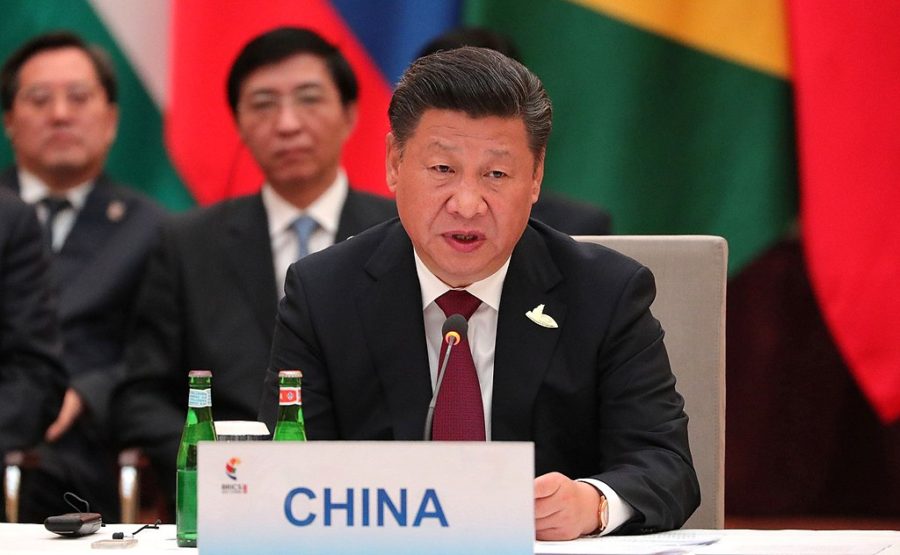
The pact, titled “Framework Agreement between the Government of the People’s Republic of China and the Government of Solomon Islands on Security Cooperation”, highlights a disturbing trend: China, after years of persistent commercial, diplomatic and military efforts, is taking over the Pacific.
READ ALSO: Gordon Chang: Helping China in Space Is Suicide
Beijing is moving from one group of islands to another, and soon the People’s Liberation Army will be within a short distance of Hawaii.
Cleo Paskal, of the Foundation for Defense of Democracies, told Gatestone that the Framework Agreement was a “unilateral decision by Sogavare”. “There was no public consultation,” she noted.
The five-year agreement, subject to automatic renewals, will allow Beijing to use the islands as a military base and do practically whatever Chinese generals and admirals want. “China,” the pact established in its Article I, “may, according to its own needs and with the consent of Solomon Islands, make ship visits, carry out logistical replenishment, and stop over and transition in Solomon Islands, and the relevant forces of China may be used to protect the safety of Chinese personnel and major projects in Solomon Islands.”
If fully implemented, the Framework Agreement will give China the ability to cut the sea lanes and air links that connect the United States with its treaty ally, Australia, and its partner, New Zealand.
For decades, Washington allowed Canberra and Wellington to manage the Solomons and their region, and both Western powers, through a corrosive combination of neglect and condescension, allowed China to make significant inroads. Beijing, through bribes that are now detailed in public, essentially owns the Sogavare government.
It is no wonder that Sogavare is fulfilling Beijing’s wishes. In 2019 he switched diplomatic recognition from Taipei to Beijing and, at home, opened the door wide to Chinese investment.
The prime minister has also mismanaged the country, for example by marginalizing the country’s most populous island, Malaita, and threatening its premier, Daniel Suidani, putting his life in danger. Suidani resolutely opposed the Chinese takeover of the Solomon Islands.
In November, because of bad governance, Sogavare provoked deadly riots in the capital, Honiara, on the island of Guadalcanal, where 1,600 Americans died in 1942 and 1943 liberating the island from Japanese control.
Australia sent police and troops in November to restore order and thus save the Sogavare government, which then seemed to be on the brink of failure. Canberra’s mistaken intervention made it easier for Sogavare to invite Chinese police in February. Beijing’s presence consolidated his hold on power.
The Framework Agreement also establishes, in its Article 1, that “Solomon Islands, according to its own needs, may request China to send police, armed police, military personnel and other law enforcement and armed forces to Solomon Islands to assist in maintaining social order, protecting people’s lives and property, providing humanitarian assistance, carrying out disaster response or providing assistance on other tasks agreed by the Parties”.
On the 25th, Honiara said it would maintain its 2018 security agreement with Canberra, but it was evident that Sogavare only sought police and military help from China.
Sogavare, backed by Beijing’s military and the Framework Agreement, could in effect end democracy in the Solomons. Paskal, who closely follows the Pacific, reported that the prime minister is trying to postpone elections. “If Sogavare can trigger an internal security crisis, he will use it as an excuse to stay in power,” she noted. “China will help the prime minister provoke a civil war. That war will provide Sogavare with an excuse to call in the Chinese military, under the new agreement.”
As Paskal told Gatestone, Beijing has already aggravated tensions so it can come to the “rescue of the country”.
The inter-island tensions that fuel the current crisis are not new. In 2000, similar disputes ended with the Townsville Peace Agreement, which Sogavare, also prime minister then, failed to implement. Paskal suggested the agreement could be the basis for another accord.
The Solomons are not an isolated case of Chinese penetration of Pacific governments. There is now talk that China will sign a security agreement with Papua New Guinea, north of Australia.
In addition, China wants to upgrade an airstrip in Kiribati. Beijing said the improvements are only for civilian purposes, but the military uses are evident and no one believes Chinese assurances.
The facility is only 1,900 miles south of Hawaii. In Pacific terms, Kiribati is the United States’ next-door neighbor.
This article was originally published in Gatestone on March 31, 2022.
Author: Gordon G. Chang.