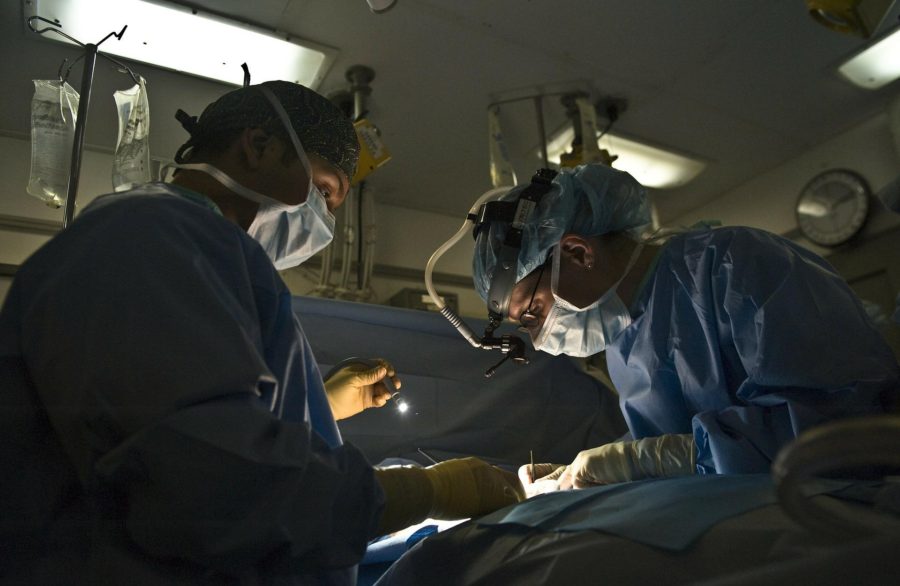


Members of the European Parliament’s Subcommittee on Human Rights, chaired by María Arena, denounced at a recent meeting how the Chinese regime continues to carry out, on a large scale, the crimes of forced organ harvesting from prisoners of conscience.
Sir Geoffrey Nice, who was chairman of the China Tribunal 2019, criticized, together with some MEPs, organ harvesting in China and presented new evidence on these crimes, expressing his outrage and inviting those present to take energetic measures so that the International Community acts quickly and forcefully to end these human rights violations in China.
The China Tribunal 2019, chaired by Geoffrey Nice QC, carried out an analysis of all existing evidence on forced organ harvesting and defined it as a “form of organ trafficking” or, in other words, a living organ bank. It alleged that “in China, prisoners of conscience are killed in order to remove one or more of their organs. The recipients of these extracted organs are Chinese citizens or international transplant tourists who travel to China and pay substantial sums to receive trafficked organs.”
READ ALSO: World Summit: Experts Warn Humanity About Forced Organ Harvesting in China
And it went on to allege in its analysis that “the alleged victims of forced organ harvesting are mainly people who follow the meditation practice of the Falun Gong Buddha School, possibly together with Uyghur Muslims [a Turkic ethnic group currently detained in large numbers in the Xinjiang region] and some Tibetan Buddhists and Christians from underground churches”, it concluded in its allegations.
On June 17, 2019, the China Tribunal, an independent People’s Tribunal located in London, concluded that forced organ harvesting had taken place in China for several years with the knowledge of the state (see PDF), although information about the facts reached the outside world later. The China Tribunal issued its verdict on organ harvesting in China and the Chinese regime was declared guilty.
Following the allegations about deaths from organ harvesting that became known in 2006, several investigators, especially Canadian human rights lawyer David Matas and former parliamentarian David Kilgour, produced a comprehensive investigative report titled Bloody Harvest. Investigative journalist Ethan Gutmann, following the allegation, also carried out several undercover investigations to establish the authenticity of the accusation. All of them estimate that tens of thousands of Falun Gong prisoners of conscience were killed to provide a lucrative trade in human organs and that these abuses may be ongoing.
Falun Dafa, also known as Falun Gong, is an ancient spiritual practice of the Buddhist tradition. It consists of moral teachings, four gentle exercises and a meditation, which constitute a truly unique and highly effective way to improve health and energy levels.
The World Organization to Investigate the Persecution of Falun Gong (WOIPFG) indicates that “since 2006, allegations have been made of mass killings of Falun Dafa practitioners for organs. With each year that has passed since then, and in particular during recent years, more evidence has emerged supporting the allegations”, WOIPFG reports and adds that “the methodologies used to analyze the mass of evidence have become more robust and the concerns have become increasingly prevalent. Meanwhile, the position of the Chinese regime and its defenders, who seek to deny the claims, has become increasingly untenable.”
A medical researcher and member of the China Tribunal, Martin Elliott, Professor of Pediatric Cardiothoracic Surgery at University College London, explained to the European parliamentarians that there is a great deal of proof and evidence on which the Tribunal’s conclusions were based. One piece of evidence is that, in China, “the number of registered organ donors has always been lower than the number of transplant operations”, and he added, “which means there is a ‘hidden organ donor bank’.”
Spanish MEP María Soraya Rodríguez Ramos also expressed her condemnation before the Subcommittee on Human Rights and said that organ harvesting in China was really murder “on an industrial scale”. Among several other arguments, she said that the European Union must monitor and strengthen legal protection to ensure that none of these organs enter the member states.
Dominic Porter, head of the China, Macao, Taiwan and Mongolia departments at the European External Action Service (EEAS), showed great concern before the subcommittee and said that the results of the statistics on the death penalty and organ transplants in China were constantly recurring concerns. He added that the European Union condemns organ harvesting, forcefully calling it criminal and inhumane.