


In an exclusive interview with Global Times on March 18, 2022, Zheng Yongnian, professor at the Chinese University of Hong Kong (Shenzhen) and director of the Institute for Advanced Studies of Global and Contemporary China, said that the lesson for China from the Russia-Ukraine conflict is that China should open up more. Economic ties with the West will make it harder to keep the parties involved in the contest in line. Here are some of the main points of Professor Zheng’s statement:
The Russia-Ukraine Conflict May Have a Major Effect on the International Order
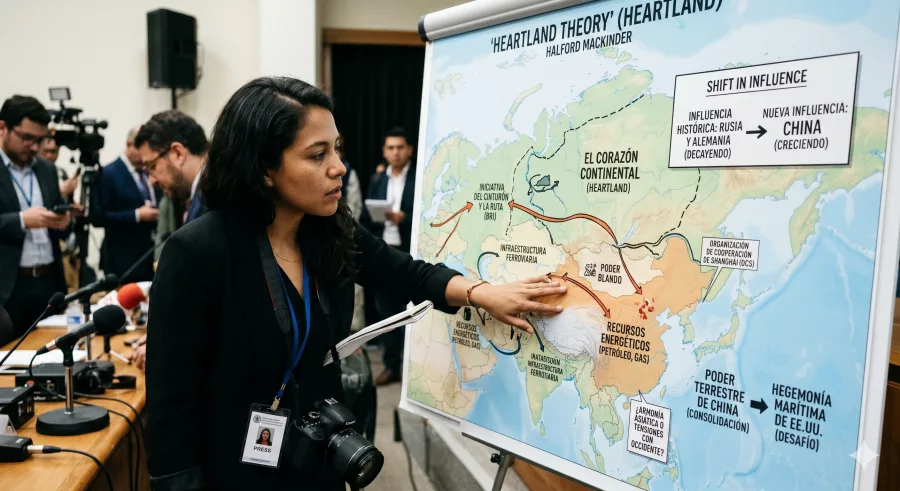
Since the end of the Cold War, the United States has increasingly despised Russia, considering it a “troublemaker,” and has considered China a major competitor or even an enemy. For this reason, in recent years the United States has been building an “Asian mini-NATO” against China. The strategic focus of the United States is increasingly shifting from Europe and the Middle East to the Asia-Pacific region.
In general, the post-World War II international order is in the process of rapid disintegration. Many countries are seeking their own geopolitical sphere of influence. They hope to establish an international order that benefits them.
READ ALSO: Huawei Uses a Network of Fake ‘Experts’ to Influence Belgian Lawmakers
What the United States is doing now in Asia is no different from what NATO did when it was formed. The real prototype of the “Asian version of NATO” already exists. The reason the conflict between the “Asian version of NATO” the United States tried to form and China has not escalated sharply is entirely that China does not want to follow the example of the former Soviet Union in forming its own bloc. After the Russia-Ukraine conflict, the trend of Asia becoming the center of the world economy will become more evident and the United States’ involvement in Asia will expand even further.
Three Important Lessons for China From the Russia-Ukraine Conflict
The lessons for China from the Russia-Ukraine conflict were enormous. The biggest difference between China and Russia is that Russia is only a military power without being a strong economic power, while China has both sufficient military power for self-preservation and strong economic power. In addition, it maintains close economic ties with the West. Therefore, in the eyes of the American elite, China represents a much greater challenge to the United States than Russia. The three lessons follow:
1. China must open up more, and Chinese companies must overcome all difficulties and continue to work hard to globalize. Economic interdependence absolutely cannot prevent the outbreak of war, but it can moderate its intensity. If the economic sanctions the United States and Europe imposed on Russia are meant to “kill a thousand enemies while suffering a loss of five hundred,” then sanctioning China, which has an open and strong economy, would become “killing a thousand enemies while suffering a loss of a thousand.” Therefore, it is hard to sustain such sanctions. An economy mutually linked between China and the West has already caused real pain to the West.
2. China cannot accept the West fully tying China and Russia together, nor can it allow the United States to “hijack” Europe. China and Europe have enormous common interests, but no geopolitical disputes. Ideological differences are entirely possible to bridge. Although Europe’s current security concerns override its economic considerations to a certain extent after the Russia-Ukraine conflict, Europe remains an object of pursuit for China.
3. How should China handle the relationship between “openness” and “security”? Security is always a relative concept, and non-openness provides the greatest insecurity. What we should do is explore our own security mechanism in an open state, rather than stop opening up to the outside world for the sake of so-called absolute security.
Source: Global Times
Article published in China Scope on March 18, 2022.