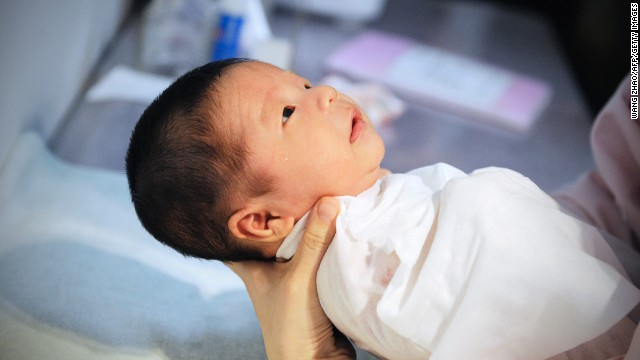






Chinese experts are warning of an imminent collapse in China’s population growth rate, as China’s National Bureau of Statistics postponed the release of 2020 birth data, the agency revealed at a press conference held on January 18.
In an article published on Caixin.com, Liang Jianzhang, founder of the Trip.com group and a professor at Peking University, cited data from local governments and media. The number of births in the city of Wenzhou in 2020 was 19.01% lower than in 2019. New births in the city of Hefei in 2020 fell 23 percent compared with 2019. The same measure in the city of Taizhou in 2020 recorded a decline of 32.6 percent. Liang suggested that the fertility rate can be fundamentally reversed only by implementing changes to family planning policies, lowering housing costs and cutting taxes.
Yi Fuxian, a scientist at the University of Wisconsin-Madison and author of Big Country with an Empty Nest, said recently in a tweet that “today’s northeast region is China’s tomorrow.”
Yi noted that the northeast region’s economy as a share of the whole country shrank from 13.1% in 1980 to 9.1% in 2010 and to 5% in 2020. A key factor is the aging of the population.
Yi told Radio Free Asia: “The central government predicted that the economy will double by 2035 and that the annual growth rate will average 4.7 percent between 2021 and 2035. From a population perspective, I think this is very unlikely. China’s economy could maintain a growth rate of 4 or 5 percent until 2025, and after that the growth rate would decline continuously.“
National Bureau of Statistics data show that the birth rate in the three northeastern provinces in 2019 was only 0.61 percent, even lower than the 0.68 percent birth rate in Japan, the world’s oldest country. The reasons for the decline in the fertility rate in northeast China, according to Yi, include a high level of urbanization, a high share of the population working in the state sector, high compliance with the government’s family planning policy, a low marriage rate and a high divorce rate.
This article was published in Chinascope on February 3, 2021.