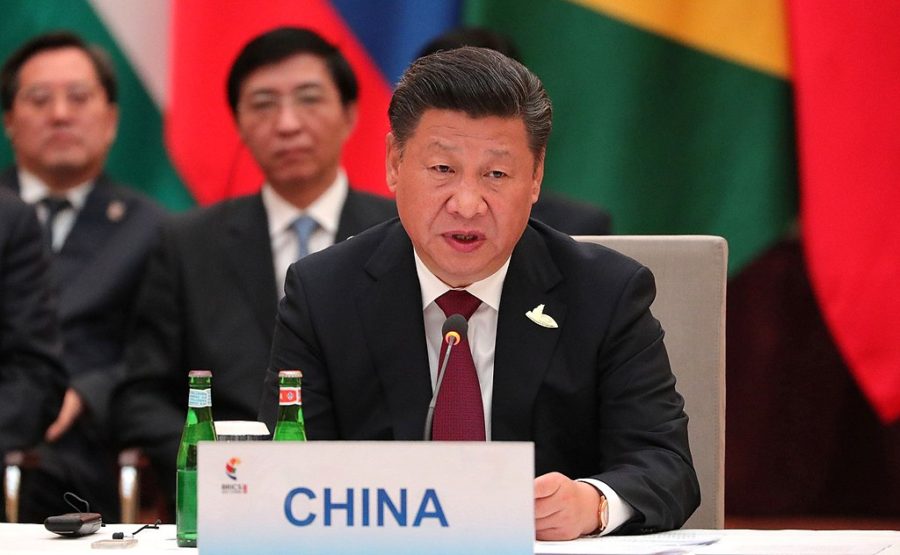


In early November 2021, the 19th Central Committee of the Chinese Communist Party (CCP) convened its sixth plenum, whose conclusion seemed to pave the way for Xi’s third term. After Mao Zedong and Deng Xiaoping, Xi is the third leader in the history of Communist China to pass self-approving “resolutions”, appointing himself to indefinite leadership by overriding the two-term limit.
Despite some controversy, the meeting approved the “Resolution on the Major Achievements and Historical Experience of the Party’s 100 Years of Endeavor”. It also elevated “Xi Jinping Thought”, positioning Xi as the country’s Great Leader. Xi was said to have announced “a new era of socialism with Chinese characteristics”.
Is Xi prepared to hold the CCP’s scepter of power for another five or ten years, or even longer?
READ ALSO: China’s Hidden Demographic Crisis Could Bury the CCP’s Economic Ambitions
Xi is close. He managed to remove the two-term limit from the Party Constitution. His affiliates held key positions over the last decade. In terms of competence, there appears to be no worthy rival or adversary capable of taking his place. However, there is something more. Given China’s historical precedents, when a major political event is undertaken or a war campaign is carried out, it is customary for the supreme leader to promote a public narrative that justifies the new policy or direction. The real question is: “What is Xi offering China as justification for his recent actions in proclaiming himself above the Great Mao Zedong and Deng Xiaoping?”
Cracks in the “Great Leader” Narrative
Xi’s team offered the following narrative: Mao made China “stand up (站起来)”, Deng made China “rich (富起来)” and Xi made China “strong (强起来)”.
The question is, when Beijing faces so many problems both at home and abroad, what is Xi basing his claim on that he made China “strong”? On the foreign relations front, China is increasingly isolated, as the world holds it responsible for the spread of COVID-19, for the Uyghur genocide in Xinjiang, for years of unfair trade practices and for decades of intellectual property theft from foreign countries.
On the economic side, China faces a multitude of dangers, starting with the imminent collapse of the real estate bubble that threatens to take down giants like Evergrande, which in 2021 had hundreds of billions of dollars in debt payments due, leading to the “Evergrande liquidity crisis”. This was one of the reasons for the fall of many stock indices on September 20, 2021.
ALSO READ OUR SPECIAL REPORT: The Fall of Communism in China: Lessons from the Collapse of the USSR
The Chinese government is reportedly working on restructuring Evergrande to resolve the crisis. The mass exodus of foreign companies, combined with weak domestic consumption, has already created a precarious situation, not to mention the Tang Ping phenomenon. Meanwhile, Chinese Premier Li Keqiang reported in May 2020 that in China there were 600 million people whose monthly income was less than 1,000 yuan [$154].
On the military side, Xi lacks a war victory to show off his power, as China has not gone to war for more than 40 years. Taking Taiwan by force could give him that distinction, but it is risky. A military defeat would most likely end his political career. It would be better for him to consider war as an option after securing his next term.
However difficult it may be to convince the general public of Xi’s greatness, it would be foolish to underestimate Xi’s determination to craft a sufficiently convincing narrative that justifies his actions.
The Deeply Rooted Communist Psyche
What do Xi’s memories of the past allude to, what awaits him in the present and what does this imply for the future? To show his strength and endurance, Xi told the story of having carried 200 pounds of wheat over 10 miles along a mountain path as a young man in a Shaanxi village. To see his determination, we observe how Xi launched an anti-corruption campaign to take down Zhou Yongkang and other Jiang Zemin loyalists who were planning a coup to overthrow him after he took the top post. If we ask about future ambitions, we need look no further than the broad efforts devoted to removing the barriers obstructing his prolonged rule.
Xi’s inspiration probably comes from Mao, who considered himself predestined for world domination. Mao once stated in a poem, no doubt referring to himself, that today’s heroes would surely surpass the two great emperors of ancient China: Qin Shi Huang and Emperor Wu of Han. The former unified China, while the latter, in 87 BC, greatly expanded Chinese territory.
Born in 1953, Xi was in his first year of secondary school at the start of the Cultural Revolution. Beginning in 1966, and for a period of ten years, the Cultural Revolution ended basic school programs and higher education in exchange for communist indoctrination. This explains why many believe Xi had little more than a primary education. Although Xi later obtained a bachelor’s degree and a doctorate from Tsinghua University, doubt remains as to whether the degrees were properly earned.
The young Xi grew up steeped in communist programming, reading the selected works of Mao Tse-Tung (Mao Zedong) and quotations from Chairman Mao Tse-Tung. Naturally, Mao’s philosophy became deeply rooted in Xi’s psyche. “That is why Xi Jinping often makes mistakes in public when he quotes traditional Chinese phrases, but handles himself with ease when he quotes words or poems of Mao Zedong.” Between his limited education and Xi’s reverence for Mao’s writings, it appears that Mao’s personal ambitions and communist ideology sank deep into Xi’s bones, making him a firmly devout and orthodox Marxist believer.
Evidence of Xi’s Communist Complex
Communism makes a state-planned economy prevail over private enterprise, favoring state-owned enterprises. Cooperatives are the signature of a state-planned economy, which claims to be “owned by the people” while actually being run by the central government. Prevalent throughout China in the Mao era, from the 1950s to the 1970s, cooperatives were declared ineffective during Deng Xiaoping’s reign, when market economy reform made cooperatives disappear.
Since taking office in 2013, Xi has had the central government rebuild more than 10,000 cooperatives which, by 2017, totaled 32,000. Now, 95 percent of cities and towns across the country have state cooperatives as part of the local economy. As expected, Xi’s regime promoted the expansion of public enterprises while displacing private companies.
Reinforcing Maoist ideology, Xi launched the campaign “Never forget the original (communist) intention and remember the mission (不忘初心、牢记使命)”, whose high point was for party members to renew their communist vows. He himself led members of the Politburo Standing Committee twice in renewing their vows of devotion to the party. The first was at the CCP’s First National Congress site in Shanghai on October 31, 2017. The second time was at the CCP History Exhibition Hall in Beijing on June 28, 2021.
“Common Prosperity” as Xi’s Achievement
With the strong desire he had to be the “supreme leader”, while being deeply rooted in the communist complex, one would expect Xi to look to communist doctrine to justify his continuity in power. That is perhaps the inspiration behind the recent push for “common prosperity”, which aims for everyone to be equally prosperous. China has a large income distribution gap between rich and poor. In 2020, China’s Gini index stood at 46.5, indicating great inequality in income distribution. The richest one percent in China owned nearly 30 percent of total wealth that year. If Xi can move wealth from the rich to the poor and make the poor feel much better off than before, then he has a chance to claim he has made China “strong”.
Last August, Xi launched the “common prosperity” agenda, which China’s propaganda media echoed for free. The CCP also spoke of the “third distribution”, using “charity”, that is, forced donations, to redistribute wealth from the rich to the poor. At the same time, the authorities sent a clear message to Chinese companies when Ma Yun (Jack Ma), the founder of Alibaba, mysteriously disappeared, while fining several large companies for being “market monopolies”.
Right on cue (August 18, 2021), a day after Xi mentioned “common prosperity”, Tencent, the parent company of China’s popular social networks WeChat and QQ, announced it would contribute 50 billion yuan ($7.8 billion) to so-called rural revitalization. Other private business owners followed suit. Zhang Yiming, former CEO of ByteDance, donated 500 million yuan; Wang Xing of Meituan donated $2.27 billion; Lei Jun of Xiaomi donated $2.2 billion; Huang Zheng of Pinduoduo donated more than $2.2 billion and pledged to donate all net profits next year. After Alibaba donated 100 billion yuan, Ma Yun mysteriously reappeared in public after his long absence.
Common prosperity also seems to be fashionable among Xi’s collaborators. Zhejiang party secretary Yuan Jiajun, in a high-profile event, led provincial leaders in donating a day’s salary on September 3, dubbed “China Charity Day”.
Will Xi succeed in these wealth-sharing efforts to make the Chinese people “strong”? It is unlikely.
Acquiring Wealth in the 1950s Through Plunder
The CCP’s past is riddled with plunder of the wealth of the productive members of society. The implementation of those policies was often followed by tragedy, state terror and a high body count. Let us go back to the early 1950s, when the CCP sent millions of soldiers to fight in the Korean War, only to find itself poorly prepared and in great need of supplies. The CCP appealed to the general public for donations, expecting wealthy businesses to contribute. The results, disappointing and meager, did not meet expectations.
To “motivate” the rich to generously open their wallets, in the winter of 1951 the CCP launched a campaign against capitalists known as the “five antis” campaign. In effect, the party invented the narrative of the “corrupt capitalist” to set an example using a Chinese tactic called “executing one as a warning to the other hundred”.
The man to be sacrificed was Wang Kangnian, owner of a well-known “Da Kang Pharmacy” shop in Shanghai. After the military “bought” medical preparations from him, the CCP did not pay the bill. After cheating Mr. Wang a second time, the successful pharmacist refused to provide his services when the country’s military contacted him to place a third order.
In January 1952, Mr. Wang’s staff, mobilized by the authorities, accused him of tax evasion and of stealing state money. In February, the Jiefang Daily, the newspaper of the Shanghai CCP Committee, published a series of press articles using invented accusations as a smear campaign. Wang was accused of bribing officials and keeping army money. The accusations included selling military first-aid kits with unsterilized gauze, used medical equipment and counterfeit medicines. According to the propaganda campaign, Wang’s kits were to blame for thousands of wounded soldiers dying unnecessarily from bacterial infections at the front. The fact that Wang had never actually supplied these goods to the military was irrelevant.
State media stirred the pot, popularizing hatred against “black-hearted” merchants. People denounced Mr. Wang with disgust, after which he was arrested and the authorities had a firing squad execute him in February 1953. The CCP’s mission was accomplished; an example had been set.
After Mr. Wang’s arrest, capitalists and industrialists across the country responded “warmly” to the Party’s call, launching a fervent wave of “airplane donations”. They donated money for the military to buy aircraft. The amount of “donations” from Shanghai capitalists alone came to more than 600 billion yuan (the equivalent of $10 million in 1952), or the value of 404 aircraft. Does this start to sound familiar?
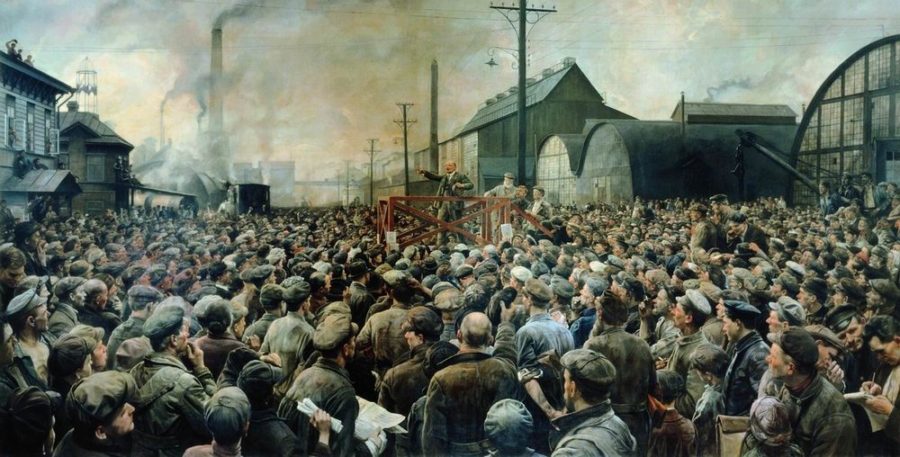
The CCP was not satisfied with charitable donations from the rich. They wanted everything: starting with the “Socialist Transformation” movement in 1953, with the confiscation of land from landlords and businesses from capitalists. It also confiscated all private property, including houses, clothes, personal belongings and so on, to “redistribute” among “the People”. The CCP handed land to the peasants while appointing state officials to run it. Within a few years, Chinese agriculture was ravaged by terrible productivity that led to widespread famine for decades. Factories were redistributed from entrepreneurs to the people. The CCP declared workers the new owners, while appointing CCP managers to run them, and thus the state-planned economy was born.
To avoid future problems, the CCP killed landlords, capitalists and, in general, anyone who disagreed. Every afternoon, Shanghai’s then-mayor Chen Yi, while having tea, would calmly ask: “How many paratroopers fell to the ground today?” He was referring to how many capitalists jumped to their deaths from the city’s buildings. The CCP effectively achieved its goal of a wealth takeover, eradicating an entire class of productive owners and well-off businesspeople.
The Paradox of Xi’s Wealth Redistribution
If today’s Xi wants to follow the 1950s model, he will find an ironic difference. Today’s “capitalists” and “wealthy elites” are party officials, who serve as the backbone that holds the CCP’s power structure together. Over the last decades, we know that CCP officials and their families became the de facto rich in mainland China today.
Reports show that former CCP chief Jiang Zemin and his family own more than a trillion dollars in assets outside China. When Xi removed top CCP official Zhou Yongkang in 2015, Reuters reported that a record $14.5 billion was confiscated from Zhou’s family and his closest associates. When Xi arrested Xu Caihou, a senior military officer of the People’s Liberation Army (PLA), the authorities found enormous stockpiles of cash, jewels and antiques at Xu’s residence. The cash alone is said to have weighed more than a ton, and the total loot filled more than a dozen military trucks when it was finally moved.
It is important to note that Chinese businesspeople, however successful they may appear, are secondary to those who really rule. How so? Entrepreneurs depend on senior CCP officials, who offer them favors and protection. After all, they are carrying out the CCP’s will. This gives them an advantage in business. Logically, the wealth under their names is in fact connected to the own agendas of high-ranking officials, not to some rich private tycoon who can be demonized through the Marxist apparatus of “class struggle”, or is it? It does not appear that Xi is offering his high-ranking party comrades any protection at all.
Amid Xi’s delusions of grandeur, his coronation as indefinite ruler of mainland China, his appetite for global domination at any price, and his plunder of the backbone that holds the CCP together to eliminate competition, it is hard to imagine this can be sustained indefinitely. How long before the ship sinks from holes drilled in the deck by the very captain who holds the helm? The cracks in the facade are beginning to show with Xi’s recent failed efforts to impose a new property tax across China. The property tax, initially presented as a formula to solve local government debt problems and to control real estate prices, was scheduled to be applied on a trial basis in 30 cities before 2021. After meeting strong opposition from party officials, all owners of multiple residences across the country, Xi was forced to yield. In the end, the pilot tax was implemented in only 10 cities. This was not a victory at all.
Regardless of Xi’s determination, if he wants to give free rein to his communist complex, sharing the wealth of CCP officials with the general public, he will find himself trapped in a paradox. A CCP leader against a herd of CCP officials. Where the lone leader maintaining the utopia of orthodox communist teachings also seeks to redistribute wealth to the People, plundering the very party officials who put him in power. The greatest irony of all is that the CCP officials themselves completely abandoned loyalty to communist ideology, having become as corrupt and money-grabbing as the thugs they claim to despise.
If Xi dares to undertake that fight, the entire party will swallow him, without leaving a single bone. Xi’s only chance to survive the paradox of his own creation is to dissolve the CCP before it eliminates him. So what about Xi’s communist complex? As long as Xi remains on the communist ship, his idea of “common prosperity” will continue to undermine the power structure of Communist China, while his aspiration to be the “greatest leader” of all time will remain an ever-distant mirage.
Article published in China Scope on January 9, 2022.