



When U.S. troops withdrew from Afghanistan in the summer of 2021, the country fell back into the hands of the Taliban. This event reminded the world that global terrorist movements are still alive and well. However, less well known are the close historical ties and mutually beneficial relationship between terrorism and communism.
At first glance, it may seem far-fetched to suggest that there is a direct relationship between communism and radical Islam. After all, communism is atheist, while Muslims believe in Allah. That said, the theory and methods of modern Islamic extremism have much in common with those of Marxism-Leninism, and there are deep historical connections between the two movements.
The first recorded use of the words “terrorism” and “terrorist” was in 1795, describing the ‘Reign of Terror’ during the French Revolution. Communist regimes have a long history of resorting to terror to seize and hold power, with famous examples ranging from Joseph Stalin’s Great Purge and Mao Zedong’s Great Cultural Revolution to the Cambodian genocide under the ‘Khmer Rouge’. This trend has continued to the present day.
READ ALSO: Opinion | Biden Lets the CCP Get Away With the Crime of the Century
Conversely, the influence of communism on global terrorist movements goes directly back to the origins of modern Islamic extremism in the mid-20th century.
The Communist Roots of Terrorism
Many citizens are familiar with the names of Osama Bin Laden and his militant group Al-Qaeda because of their role in the September 11 attacks. Although the acts of Islamic extremism of recent decades captured the world’s attention, the 20th-century writings of Sayyid Qutb ([ˈkuːtəb]) are relatively less well known. Sayyid Qutb was the pioneer of what is now known as radical Islam. He was the Egyptian liaison of the Egyptian Muslim Brotherhood with the Communist International and the Communist Party of Egypt.
Called “the Karl Marx” of radical Islam, Qutb’s writings serve as the philosophical basis of modern Islamic extremism. His advocacy of violence, oppression and revolution was directly inspired by Marxism-Leninism.
Qutb’s key idea was the pursuit of violence to destroy the old society dominated by “jahiliyyah” [jah-ih’-lee-ya]. Jahiliyyah means “the age of ignorance”, referring to the period of time before the advent of Islam. According to Qutb’s theory, the old society of jahiliyyah imposed itself on people, robbing them of their freedom. He called on Muslims to give their lives in the fight against jahiliyyah.
Sayyid Qutb’s writings influenced many Arabs, including Abdullah Azzam, co-founder of al-Qaeda. There is a saying among supporters of the Islamic State (ISIS): “The Islamic State was drafted by Sayyid Qutb, taught by Abdullah Azzam, and globalized by Osama bin Laden”.
This idea of using violence to destroy the old society mirrors the Marxist idea of class struggle.
Communism’s theories of class struggle and violent revolution hold that society is characterized by the perpetual oppression of one class by another. To overthrow the ruling classes and liberate humanity, terror is considered a necessary tool. Meanwhile, Qutb said that those enslaved by the old society of jahiliyyah, like the working-class people mentioned in Marxism, are destined to overthrow the oppression of the old society. He advocated jihad, the Arabic word for struggle, as the means to achieve the liberation of all humanity.
As Glenn Robinson, a professor at the Naval Postgraduate School in California, said: “Modern jihadism is distinctively Leninist.” Journalist Chuck Morse also noted: “The real enemy facing the free world remains communism. Radical Islamism is nothing more than communism wrapped in the traditional garb of Islam.”
Chinese Communists’ Support for Islamic Terrorism
Before retaking Afghanistan in August 2021, the Taliban ruled the country from 1996 to 2001. According to a United Nations (UN) report, the Taliban carried out “15 massacres” during this earlier administration. In 1998, the UN accused the Taliban of denying emergency food to 160,000 hungry people “for political and military reasons”. As of October 2021, at least 14 of the 33 ministers in the Taliban’s new administration were designated as terrorists under the UN Security Council’s 1988 Sanctions Committee.
In August 2021, just days after the fall of Kabul to the Taliban, Beijing launched a whitewashing campaign for this UN-designated terrorist group. The Chinese Communist Party (CCP) mouthpiece, China Central Television, broadcast a video titled “What Exactly Are the Taliban?”. It presented the Taliban as an anti-corruption group supported by poor Afghans. Not a single word mentioned the Taliban’s crimes against people in Afghanistan or elsewhere in the world.
Similarly, Chinese Foreign Ministry spokeswoman Hua Chunying avoided answering a question at a press conference about whether China would recognize the Taliban regime. She suggested that the Taliban should be treated not only on the basis of “what happened in the past”, but also on the basis of “what is happening now”. She added that today’s Taliban members are “more sober and rational” than during their last administration. At the time of her talks, media and social networks were already publishing video footage of Taliban militants dragging people out of their homes, executing them and hanging them in the streets while thousands of Afghans fled the country.
This support for the Taliban is not an isolated phenomenon: China’s history of supporting radical Islam goes back decades.
For example, in 1998, after the United States struck Al Qaeda with cruise missiles, the Chinese regime reportedly paid Osama bin Laden $10 million for unexploded missiles, presumably to reverse-engineer the technology. Iran’s state news agency reported in December 1998 that the Taliban concluded a defense cooperation agreement with Beijing.
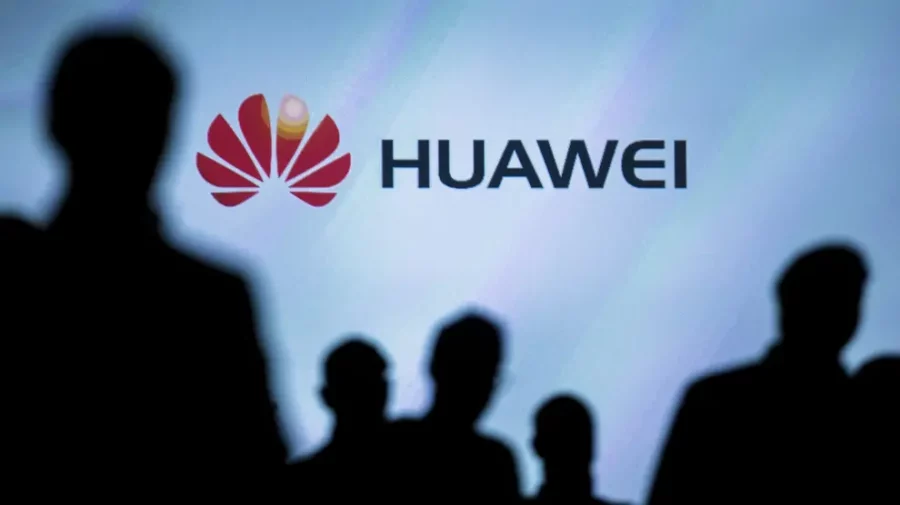
According to a Washington Post article, on September 11, 2001, yes, the date is correct, China “signed a memorandum of understanding for greater economic and technical cooperation” with the Taliban. According to a Western diplomat, at that time, China had “the closest relationship with the isolated Kabul regime of any non-Muslim country”. Days after the September 11 attacks, U.S. intelligence officials revealed that two Chinese telecommunications companies, ZTE and Huawei, helped the Taliban militia install a telephone system in Afghanistan’s capital, Kabul. ZTE and Huawei were at the top of sanctions lists as national security threats during both the Trump administration and the Biden administration. The BBC and other sources reported that, even after the September 11 attacks, Beijing continued to supply the Taliban with surface-to-air missiles, anti-aircraft weapons, land mines, rocket-propelled grenades, parts for roadside bombs, large-caliber sniper rifles and millions of rounds of ammunition. Some of these weapons were shipped to the Taliban directly from factories in China.
In the Chinese book Unrestricted Warfare, published in 1999, two Chinese military officers discuss several hypothetical attacks against the U.S., and mention both the World Trade Center in New York and Osama bin Laden: “Whether it be hacker intrusions, an explosion at the World Trade Center, or a bomb attack by Bin Laden, all of these greatly exceed the frequency bandwidths understood by the American military.”
What a coincidence between the CCP’s discussion of “hypothetical attacks” and the real action two years later!
China Aligns With Islamic Extremists in Its Anti-Americanism
In an article published in November 2001, the Daily Telegraph reported that “the Chinese state propaganda machine capitalized on the terrorist attacks in New York and Washington, producing books, films and video games that glorify the attacks as a humbling blow against an arrogant nation.” The article went on to report: “Chinese Communist Party officials say President Jiang Zemin obsessively watched and rewatched the images of the plane crashing into the World Trade Center.”
After Al Qaeda’s devastating attacks on the United States on September 11, 2001, Chinese Internet forums and online chat rooms filled with cheerful comments: “Good job!” and “We firmly support acts of justice against the United States.” According to a survey of more than 90,000 people on the Chinese web portal NetEase, only 17.8 percent of respondents expressed strong opposition to the attacks. Meanwhile, most respondents viewed the September 11 attacks positively and saw them as a challenge to U.S. hegemony, expressing the view that “the best is yet to come.” This overwhelming pro-Al-Qaeda and anti-American sentiment among the Chinese population underscores a dangerous friendship between Chinese communists and radical Islamic regimes.
Now, after the Taliban’s reconquest of Afghanistan, Beijing has committed to Kabul to build the Peshawar-Kabul highway, which would connect Pakistan with Afghanistan. This planned highway makes Kabul a participant in China’s enormous infrastructure and investment plan, the Belt and Road Initiative. Beijing is also building a major road through the Wakhan Corridor, connecting China’s western province of Xinjiang with Afghanistan and then Central Asia. In exchange for Chinese investment in the region, Kabul has kept quiet about China’s mistreatment of Muslims, among them Uyghur militants who maintain close ties with the Taliban. Beijing pledged to provide another $31 million in food and supplies to the Taliban regime.
International Focus on Terrorism Helps China Stay Out of the Spotlight
Communist China not only maintains friendly relations with the Taliban and Al Qaeda, but has maintained a long-term relationship of camaraderie with other terrorist states, such as Palestine, Saddam Hussein’s Iraq, Syria, Sudan, Iran and North Korea, to name a few. Beijing’s support for these states took the form of weapons, military technology sales, personnel training, infrastructure projects, financial aid and obstruction of UN sanctions. The CCP’s support for these terrorist regimes was not free.
The September 11 terrorist attacks against the United States and the resulting War on Terror profoundly benefited China. For more than a decade, the United States focused its diplomatic, military and intelligence resources on the Middle East. Meanwhile, communist China quietly grew and prospered, following Deng Xiaoping’s strategy of “hiding its capabilities and biding its time.”
Just a month after the September 11 attacks, then-U.S. President George W. Bush announced the establishment of a cooperative relationship with China. This was a reversal of Bush’s earlier description of China as a potential enemy and “strategic competitor” during his 2000 presidential campaign, just a year before.
Ironically, in its fight against terrorism, the United States partnered with the world’s largest terrorist state.
The year 2001 was the third of Beijing’s ruthless, decades-long campaign to eliminate Falun Gong, a peaceful meditation group that became popular in China during the 1990s. When the United States was diverted by its response to the 2001 terrorist attacks, the issue of human rights in China was set aside. During this period, Beijing’s massive crimes against humanity received minimal attention from the West. In fact, Beijing even called the years in which the United States could not afford to focus its attention on China a “period of strategic opportunity”.
China’s economic and military rise over the past two decades has a lot to do with global terrorism. Communism and terrorism worked together to make the world a more dangerous place. To truly win the war on terror, it is vital to understand in depth the playbooks of communism and terrorism, bearing in mind that there is a common root cause.
This article was published in China Scope on December 24, 2021.