



Political inspectors of the Chinese Communist Party (CCP) have begun the eighth round of inspections of financial institutions in China since Xi Jinping took office as General Secretary of the CCP at the 18th National Congress.
A month ago, the CCP’s Central Commission for Discipline Inspection (CCDI) announced political inspections at 25 financial institutions.
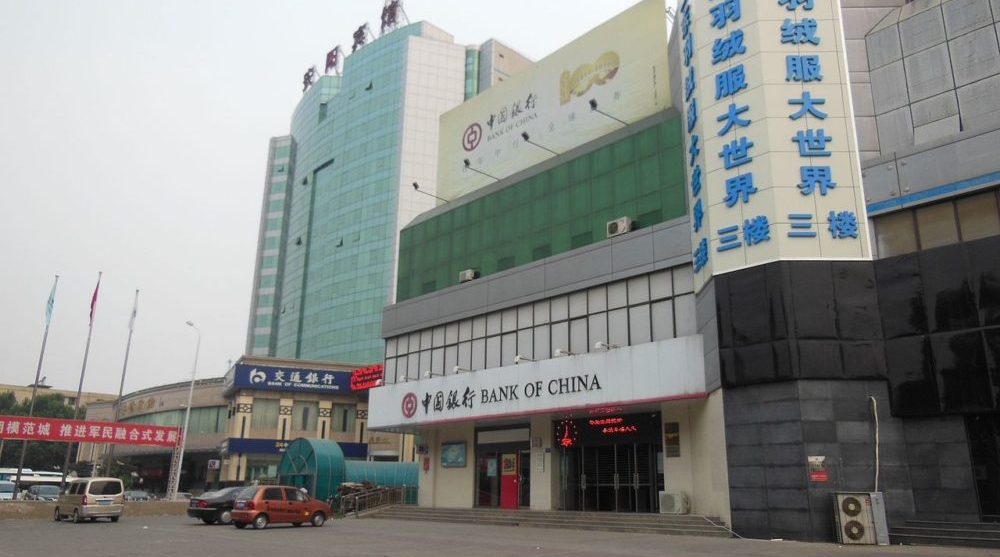
Recently, the Second Inspection Team arrived at the Bank of Communications Co. and the Shanghai Stock Exchange. The Fourth Inspection Team arrived at the China Banking and Insurance Regulatory Commission (CBIRC), and the Fifth Inspection Team was at China Everbright Group Co., Ltd. Each inspection lasted about two months.
Bank of Communications Co. Ltd. is among China’s top 5 commercial banks. It is listed on the Hong Kong and Shanghai stock exchanges. In addition to more than 2,800 branches in China, it has 23 overseas subsidiaries, branches and representative offices in Hong Kong, New York, San Francisco, Tokyo, Singapore, Sydney, Frankfurt, London, Paris and Johannesburg, as well as other cities.
READ ALSO: China-Taiwan Conflict: An Alternative Approach
The Shanghai Stock Exchange is the world’s third-largest stock market by market capitalization, at $7.62 trillion in July 2021. It is also the largest exchange in Asia. According to its website, “under the firm leadership of the CCP Central Committee and the State Council, and under the direct guidance of the China Securities Regulatory Commission (CSRC), together with the fervent support of all sectors of society, the Exchange’s mission is to serve the nation’s reform and development initiatives.” The CBIRC is a state agency under China’s State Council and is the main regulator of banking and insurance institutions.
China Everbright Group Corporation is a state-owned financial conglomerate listed on the Hong Kong Stock Exchange whose main business is alternative asset management. During the kick-off at these institutions, the Inspection Teams stressed that the inspection is “an important measure to maintain and strengthen the Party’s overall leadership over financial work, promote Party building, especially political development, and an important measure to safeguard national economic security and promote the financial industry.” It is also “an important measure to strengthen comprehensive and strict Party governance in the financial sector and promote the deepening of the anti-corruption struggle.”
The Inspection Teams urged the Party committees at these financial institutions to “improve their political positions and strengthen their political responsibilities” and set up inspection hotlines and complaint mailboxes, and will receive letters and visits until December 15, 2021.
Source: Beijing News
Article published in China Scope on October 21, 2021.