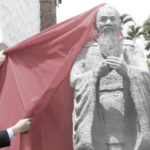
On March 4, 2021, the U.S. Senate unanimously passed the Concerns Over Nations Funding Unversity Centers In the United States Act (the CONFUCIUS Act). The bill increases oversight of Confucius Institutes and will cut federal funding to universities and colleges that do not comply with the new oversight rules.
Senator John Kennedy of Louisiana, who introduced the legislation, stated: “Confucius Institutes are under the control of the Chinese Communist Party in everything but name.” “This bill would give colleges and universities full control over their resident Confucius Institutes and restore freedom of thought on their campuses.” {1}
I. What Are Confucius Institutes?
Confucius Institutes (CIs) are Chinese government-sponsored organizations that offer Chinese language and culture classes on university campuses or in primary and secondary school classrooms around the world. The Confucius Institute is named after the famous Chinese educator and philosopher Confucius, who lived about 2,000 years ago, from 551 to 479 BC. Although the Chinese Communist Party (CCP) condemned Confucius as a relic of the country’s feudal past and an obstacle to the Party’s vision of social transformation during the Cultural Revolution (1966-1976), in recent decades it has reclaimed the name of Confucius in its official propaganda. The Institute ostensibly aims to meet the demands of foreign students of Chinese, contribute to the development of multiculturalism and build a harmonious world.
READ ALSO: What China’s ‘Zero COVID’ Policy Hides: Part I
The first CI opened in 2004 in Seoul, South Korea. By the end of 2018, the CCP had established at least 548 CIs aimed at colleges and universities and 1,193 Confucius Classrooms aimed at primary and secondary schools in 154 countries. Among those CIs, 12 were in Canada, 29 in the United Kingdom and 106 in the United States. {2} {3} The United States is the country with the most CIs. In January 2019, data from the U.S. Government Accountability Office showed about 110 CIs located in 44 of the 50 states. {4}
II. Why Are People Concerned About Confucius Institutes?
A. CIs are part of the CCP’s United Front work. They are designed to infiltrate the United States
CIs depend on Hanban, the colloquial abbreviation for the Office of Chinese Language Council International. According to its website, “The Hanban/Confucius Institute Headquarters is a public institution affiliated with the Chinese Ministry of Education (MOE). The Institute is committed to providing Chinese language and culture teaching resources and services worldwide.” It states that CIs are: “The non-profit public institution which aims to promote Chinese language and culture in foreign countries.” {5}
Of course, CIs are not simple nonprofit organizations devoted to promoting a harmonious multicultural world. In reality, CIs are affiliated with the CCP’s United Front Work Department (UFWD). The UFWD is a CCP agency dedicated to gathering intelligence, managing relationships and trying to influence elite individuals and organizations inside and outside China in order to advance the CCP’s goals. The CI was launched in 2004. It was under the charge of the head of the UFWD, Liu Yandong, former Chinese vice premier and Politburo member. {6} Liu chaired the Hanban Confucius Institute headquarters until 2020.
Communist United Front work is inspired by the Leninist theory of uniting with lesser enemies to defeat greater ones. The important goal of the CCP’s United Front work is to “unite all the forces that can be united” to thwart “enemy forces from the outside.” {7} The U.S. State Department described the United Front Work Department (UFWD) as “an organ responsible for co-opting and neutralizing threats to the party’s rule and for spreading its influence and propaganda abroad.” {8} The CCP’s UFWD directs many United Front activities to indoctrinate people with CCP ideologies or to promote the CCP’s positive image. As former CCP head Hu Jintao stated, “Establishing and spreading Chinese language institutes, such as Confucius Institutes, around the world is to increase the influence of our [Chinese Communist] Party around the world.” {9}
B. CIs are under the direct control of the CCP to achieve sub-national infiltration of American education
Hanban’s website claims that CIs were created to follow in the footsteps of the UK’s British Council, France’s Alliance Française, Germany’s Goethe-Institut and Spain’s Instituto Cervantes. {10} All of these institutes operate independently or semi-independently, with no direct relationship to any university or college. Their governments do not directly manage these institutes, while CIs are completely different. CIs are directly under the direction and control of the CCP in order to carry out its objectives. The hiring of CI teachers, their pay, the CI operating agreement and their contracts are under the control of the CCP.
The 2019 report of the U.S. Senate Permanent Subcommittee on Investigations, “China’s Impact on the U.S. Education System,” stated: “The Chinese government controls nearly every aspect of Confucius Institutes at schools in the United States. Confucius Institutes depend on the Office of Chinese Language Council International of the Chinese Ministry of Education, known as ‘Hanban.’ Confucius Institutes are funded, controlled and mostly staffed by Hanban to present students in American schools with programming approved by the Chinese government. Hanban approves the annual budget of each Confucius Institute and has veto authority over events and speakers.” {11}
The March 2021 report by University Reform found that the contracts universities signed with the Hanban/Confucius Institute headquarters allow the CCP to decide and control what is taught in them. {12} For example, Texas Southern University’s 2012 contract stated that the university “must accept the Headquarters’ [CI’s] evaluation of the quality of teaching.” The same text also appeared in the CI contracts with six other universities, including Central Connecticut State University, Baruch College, the University of Southern Maine, the University of Wisconsin-Platteville, the University of Toledo and Binghamton University.
The contract/agreement for the CI at Central Connecticut State University further stated that “the University Institute will review the evaluations and recommendations made by the Confucius Institute headquarters on the quality of the programs and make the necessary modifications.” The contracts and agreements for the CIs at Georgia State University, Southern Utah University and Binghamton University had similar language. {13}
According to the National Association of Scholars (NAS) 2017 report, CI contracts include stipulations that all classes and staff must “adhere to Chinese law.” {14}
The eight-month investigation by Senators Portman (R-Ohio) and Carper (D-Delaware) found that it is the CCP that pays teachers to teach Chinese language and culture in Confucius Classrooms in elementary schools. There are more than 500 Confucius Classrooms in the U.S. Hanban manages the CIs and provides teachers and institute directors, operating funds, textbooks and classroom materials. The Chinese directors and teachers at all CIs have to pledge to protect China’s national interests. {15}
Ted Foss, assistant director of the Center for East Asian Studies (CEAS) at the University of Chicago, revealed that the CCP assigned a deputy director from Renmin University to the University of Chicago without giving him any specific teaching or duties. He appeared to be serving as Hanban’s overseer. Foss considered that “at every level, from the Politburo’s authority over Hanban headquarters to the Renmin deputy director reporting on the Chicago CI, with his image as a Chinese Communist Party official overseeing a Chinese university department…” and that the Chicago CI was subject to CCP surveillance and control. {16}
By entering American university campuses and academic institutes, the CI program allowed the CCP to directly spread its own version of human rights and its own version of Chinese history. As Liu Yunshan, a CCP Politburo member and head of the CCP Central Propaganda Department from 2002 to 2017, stated in a 2010 article on party building: “With regard to key issues that influence our sovereignty and security, we must actively carry out international propaganda battles against such issues as Tibet, Xinjiang, Taiwan, Falun Gong and human rights. We should do a good job in the establishment and operation of overseas cultural centers and Confucius Institutes.” {17}
CIs subvert important academic principles of autonomy and freedom of inquiry, aim to promote the CCP’s version of historical events, distort China’s history and omit the CCP’s terrible human rights record. In some CI classrooms, quotes from Mao Zedong are hung on the wall. On the surface, CIs aim to teach Chinese culture, while in fact they promote communist doctrine and transmit CCP culture. Some topics about China are banned in CIs, such as Tibetan independence, the status of Taiwan, the Tiananmen massacre, Falun Gong and universal human rights. To be consistent with the CIs’ “cultural activities,” the presentation must offer a positive image of a peaceful, harmonious and attractive People’s Republic of China. {18}
In 2009, the CI at North Carolina State University used its influence to stop a scheduled visit by the Dalai Lama to the university. In April 2013, the CI at the University of Sydney actively tried to prevent the Dalai Lama from coming to give a speech in June. {19} On July 22, 2014, Xu Lin, then director-general of Hanban, ordered that several pages be removed from the conference program at the 20th biennial conference of the European Association of Chinese Studies (EACS) in Portugal. Those pages included an advertisement from the Taiwan-based Chiang Ching-kuo Foundation for international scholars. Xu claimed that “there were some abstracts whose content was contrary to Chinese regulations.” Roger Greatrex, president of the EACS and director of the Centre for East and Southeast Asian Studies at Lund University (Sweden), protested Xu’s intimidating action. According to Greatrex, Taiwan’s Chiang Ching-kuo Foundation has a long record of sponsoring the conference and never interfered in its proceedings. Although it was the first year the CI sponsored the EACS conference, it had already begun to “own and direct” the conference program. {20}
Confucius Classrooms not only censor certain topics in teaching, but also distort the CCP’s history in their teaching. A video and a chapter of an advanced history text for Confucius Classrooms on “The War to Resist U.S. Aggression in Korea” claimed that China entered the Korean War, in self-defense, in response to the U.S. bombing of Chinese villages across the border. The video was originally in the children’s section of Hanban’s website. It was removed in 2012 after Professor Christopher Hughes of the London School of Economics shared a link with colleagues about CI teaching materials. Professor Jane Teufel Dreyer, who teaches Chinese government and foreign policy at the University of Miami, wrote after studying several of these videos and related events: “They are outrageous distortions of what actually happened.” {21}
It is well documented that the CCP’s UFWD uses the Chinese People’s Association for Friendship with Foreign Countries to strengthen its sub-national influence in the U.S. It does so through the U.S.-China Governors Forum, the U.S.-China Sub-national Legislatures Cooperation Forum, the Sister Cities program and many other programs. {22} The CI is also an integral part of the CCP’s sub-national invasion of the American education system.
Although CIs are often referred to as a cultural and language program similar to the Alliance Française for French, the Goethe-Institut for German, the Instituto Cervantes for Spanish and the British Council for English in the U.S., those institutes are independent of American colleges and universities, whereas CIs are not. CIs operate inside established universities, institutions and schools around the world, providing funding for their operation, teachers and educational materials. The de facto existence of CIs is no longer that of an outsider, but that of an insider that is now part of the host university.
Although the concern of many lawmakers or members of Congress led to the closure of some CIs in the United States, there is no legal or regulatory obligation for U.S. universities to report on their partnerships, activities or operating contracts with CIs. Therefore, American universities alone can decide whether or not to establish CIs and financial relationships. This lack of oversight, in addition to the fact that CIs are embedded in American universities and schools, gives the CCP perfect opportunities to extend its sub-national influence freely.
Section 117 of the Higher Education Act of 1965 requires almost all colleges and universities to file semiannual reports on foreign gifts and contracts worth $250,000 or more (alone or in combination with other foreign gifts or contracts). {23} However, almost no university complied with the law. The investigation by Senators Portman and Carper found that “since 2006, the Chinese government has provided more than $158 million to more than 100 American schools for Confucius Institutes.” “American schools failed to meet legal requirements to report foreign gifts to the Department of Education. Nearly 70 percent of American schools with a Confucius Institute that received more than $250,000 in a year for Confucius Institutes did not properly report to the Department of Education.” {24}
For example, China’s Renmin University and Columbia University began an academic partnership in 2008. Hanban began planning the creation of a CI at Columbia in 2008. In 2010, Hanban committed to Columbia to distribute one million dollars to the institute over five years to fund its research projects and Chinese cultural events. {25} Columbia University never disclosed that $1 million donation or any other CI-related funding in its public disclosures. With this large donation, Professor Wei Deming of Renmin University was assigned to lead the CI. Wei is also a special adviser to the religious affairs division of the CCP’s UFWD. {26}
C. The CCP is using CIs to support its military-industrial complex research
In December 2021, an investigative report by Craig Singleton of the Foundation for Defense of Democracies (FDD) {27} revealed the chilling fact that the CCP used CIs as a platform to benefit its military-civil fusion in pursuit of its military ambitions. The FDD report showed that Arizona State University, the University of Utah and Pacific Lutheran University in Washington state all had and/or still have CI partnerships with their sister university, Sichuan University, which was placed on a U.S. trade blacklist in 2019 for supporting the CCP’s nuclear weapons program.
The Commerce Department’s Entity List identifies Sichuan University as an “alias” of the China Academy of Engineering Physics, a Chinese center that oversees nuclear weapons research. This research center, which has been on the Entity List since the early 2000s, was identified as equivalent to Los Alamos, the U.S. nuclear facility in New Mexico. {28}
One of the CI operating models is the formation of a CI relationship involving three parties: the American university, the CCP and a Chinese sister university selected by the CCP to support CI programming. Most, if not all, of the Chinese sister universities chosen by the CCP provide direct and documented support to China’s military-industrial complex.
The CCP is selective in choosing its host universities. Most of the American universities where the CCP established a CI are R1 or R2 research universities. According to the Carnegie classification, R1 doctoral universities are considered the most organizationally complex and prestigious, with very high research activity; R2, the next-tier research universities, have high research activity. These R1 and R2 American research universities are often direct recipients of funding related to the National Industrial Security Program to conduct classified research or other work for the Department of Defense, the Central Intelligence Agency, the Department of Energy or the Nuclear Regulatory Commission.
Appendix II of the FDD report lists 55 R1 research institutions and 16 R2 research institutions that currently host a CI or had one planned between 2018 and 2021.
It appears that the CCP intentionally established CIs at these American R1 and R2 research universities to acquire or gain access to the most sensitive research at these universities in order to benefit its military research. Many of these American R1 and R2 research universities continue to maintain or renew their partnerships with their Chinese sister universities even after the closure of the CIs. Is the United States not unknowingly helping its enemy’s military buildup?
III. What Is the Current Status of CIs?
A. Many CIs have been closed
McMaster University in Canada was one of the first universities to suspend its CI. It did not renew its CI contract in July 2013 after Hanban’s discrimination on religious beliefs was revealed by a CI teacher who practiced Falun Gong. Sonia Zhao, a Chinese teacher who practices Falun Gong, a Buddhist spiritual movement, was hired by Hanban and sent to the CI at Canada’s McMaster University. According to Zhao, “we also had to sign a contract. The contract says ‘we cannot be Falun Gong practitioners.’ This contract is in effect at all Confucius Institutes in all countries. This contract shows discrimination against the personal beliefs of teachers, and that is how they violated freedom of belief around the world.” McMaster University ended its relationship with Hanban, stating: “We have a very clear direction on building an inclusive community, respecting diversity, respecting individual views and the ability to speak about them.” {29}
After McMaster University closed its CI in 2013, in April 2014, 108 faculty members at the University of Chicago signed a petition asking the Faculty Senate Council to suspend the CI at the University of Chicago. The petition used the McMaster University case as an example of how the CI can limit freedom of expression, and also noted that the CI is subject to Chinese law and must comply with it, and therefore the University’s academic program is under CCP restrictions. The university closed its CI in September 2014, after running it for 5 years. It stated that “recently published comments about the University of Chicago in an article about the director-general (Xu Lin) of Hanban are incompatible with a continued partnership of equals.” {30}
Rachelle Peterson, director of policy at the National Association of Scholars, who focused on many issues about CIs, detailed the closure of CIs at 24 universities from 2014 to 2019. {31} For example, Penn State University’s decision to close its CI in September 2014 came one week after the University of Chicago’s CI closure. Many lawmakers or members of Congress helped close many CIs after they clearly understood the CCP’s true objectives for operating CIs in the United States.
On February 5, 2018, U.S. Senator Marco Rubio (R-FL) wrote a letter urging Miami Dade College, the University of North Florida, the University of South Florida, the University of West Florida and Cypress Bay High School to end their agreements with CIs. Rubio stated: “There is growing concern about the increasingly aggressive attempts by the Chinese government to use ‘Confucius Institutes’ and other means to influence foreign academic institutions and the critical analysis of China’s past history and current policies.” “Given China’s aggressive campaign to ‘infiltrate’ American classrooms, stifle free inquiry and subvert free expression both at home and abroad, I respectfully urge you to consider terminating your agreement with the Confucius Institute.” {32} After Senator Rubio sent his letter in February 2018, almost immediately, the University of West Florida closed its CI. The University of North Florida closed its CI in August 2018. The University of South Florida closed its CI in December 2018.
A similar letter of exhortation from Republican Representative Martin Daniel of Tennessee {33} led the University of Tennessee at Knoxville to close its CI in the spring of 2019. The University of Massachusetts Boston closed its CI in January 2019 in response to Representative Seth Moulton’s March 2018 letters to 40 Massachusetts universities and colleges urging them to resist the Chinese government’s efforts to establish institutes on their campuses. {34} The bipartisan letter of concern from Representatives McCaul and Cuellar led to the immediate closure of the CIs at Texas A&M University and Prairie View A&M University in 2018. {35} The University of Minnesota ended its CI in 2019 after state Senator Jim Abeler, along with 40 other Minnesota state legislators, expressed concern about CIs. {36}
In August 2020, the Trump administration designated the Confucius Institute U.S. Center (CIUS), whose mission is to oversee Confucius Institutes in the United States, as a “foreign mission” of the People’s Republic of China (PRC). The designation requires CIUS to regularly submit information about its operations to the State Department. CIUS is a self-described 501(c)(3) nonprofit, funded by the PRC and based in Washington, DC. {37} Its website, http://www.uscicenter.org/, is now suspended.
The U.S. National Defense Authorization Act (NDAA) of 2019 condemned the CCP’s attempts to influence American public opinion, especially in “the media, cultural institutions, businesses and academic and political groups.” A provision in the NDAA for fiscal year 2019 (P.L. 115-232, Section 1091) prohibits the use of Department of Defense funds for Chinese language instruction provided by a CI or to support a Chinese language program at an institution of higher education that hosts a CI. {38}
The DOD funding provision, together with state Senator Abeler’s insistence, convinced the University of Minnesota to close its CI in February 2019. Indiana University-Purdue University also closed its CI in April 2019 to avoid losing DOD funding.
According to the 2021 FDD report, from 2018 to 2021, the number of CIs operating in the United States fell from 113 to 34. Among those 79 universities that closed their CIs, up to 20 percent did so to avoid the potential loss of federal funds due to the 2019 NDAA provision. {39}
Sweden was the first European country to close all of its CIs. Sweden closed its four CIs in December 2019. It suspended its last Confucius Classroom in the city of Falkenberg, in southern Sweden, in April 2020. {40}
B. CIs continue to operate but under new names
The number of actively operated CIs declined substantially in the United States in recent years. However, CIs are not disappearing, but evolving into a new phase of existence. In July 2020, the CCP quietly renamed the Confucius Institute headquarters, Hanban, to a new name. It is now called the Center for Language Education and Cooperation. It also transferred the operation of CIs from the Ministry of Education to a non-governmental organization (NGO) called the Chinese International Education Foundation. The purpose was to “disperse the Western misperception that the organization served as China’s ideological marketing machine.” {41}
At the same time, American schools also “cooperated” well with the CCP’s plan. For example, the University of Central Arkansas (UCA) announced the closure of its CI in early July 2021, ending the CI that was established in 2007. However, UCA decided to maintain a relationship with its former CI sister university, East China Normal University (ECNU). East China Normal University carries out joint research projects related to the CCP’s People’s Liberation Army. {42}
The University of Tennessee at Knoxville, an R1 research university, closed its CI in the spring of 2019, but maintains its partnership with Southeast University in China and launched its own global programming in Asia. {43} Tufts University, another R1 university, closed its CI in September 2021, but after the CI closure, focused on expanding and deepening its relationship with its Chinese CI host sister university: Beijing Normal University. {44} Portland State University, an R2 university, ended its CI in January 2021, but began to “offer a variety of other programs and resources, including what is expected to be renewed and expanded direct academic ties with faculty, students and staff at Soochow University in China.” {45} The College of William and Mary, also an R2 university, closed its 10-year CI with Beijing Normal University (BNU) on June 30, 2021. It launched its new W&M-BNU Collaborative Partnership on July 1, 2021. According to its website, “all activities agreed by W&M and BNU, or with other Chinese universities partnered with W&M, will be organized directly between the universities involved.” {46}
Other universities renamed their CIs after closing them. For example, San Diego State University (SDSU) closed its CI in early summer 2019 because of the 2019 NDAA provision. In August 2019, SDSU already launched a new Chinese Cultural Center with similar programs under its former CI director Li-Rong Lilly Cheng. {47} The closed SDSU CI was transferred to the San Diego Global Knowledge University under a new name: the San Diego Confucius Institute (SDCI). Its website indicates that the SDCI is administered by the San Diego Global Educational Institute (SDGEI), which is a California nonprofit public benefit corporation. {48}
The Asia Society, a New York-based nonprofit founded by John D. Rockefeller in 1956, was originally created to develop cultural exchanges between the United States and Asian countries. The Asia Society worked directly with Hanban to open more than 100 Confucius Classrooms in U.S. elementary, middle and high schools after starting its first programs in 2010. {49}
After the CCP renamed Hanban the “Center for Language Education and Cooperation” in June 2020, the Asia Society soon renamed its Confucius Classrooms in September 2020 the “Asia Society Chinese Language Partner Network.” In November 2020, the Asia Society already signed a new partnership with the newly formed Center for Language Education and Cooperation. At first glance, it appeared that the Asia Society was replacing Confucius Classrooms with the Chinese Language Partner Network; however, according to its website, all the new classrooms will operate and teach the same materials in the same schools. {50}
Although actively operated CIs fell from 113 to 34 between 2018 and 2021, those closed CIs are still operating in the United States, only using a different format. The CCP is still in full swing continuing to brainwash American K-12 students and infiltrate the U.S. education system. As Rachelle Peterson noted, “The United States is heading toward a post-Confucius Institute world. The Chinese Communist Party knows it and is prepared. The Chinese government’s influence is showing up with new names, with new looks.” {51} and with a new facade. And Americans? Do they know it? If not, how long will it take them to see it?
This article was originally published in China Scope on June 26, 2022.