


Although America’s war in Central Asia may be ending, concern about a possible conflict in the region remains high, and China and Russia know it. On October 1, following a war of words between the Tajik government and the Taliban, the Russian Foreign Ministry expressed its concern “over the growing tension in relations between Tajikistan and Afghanistan in the context of the mutually acrimonious statements by the leaders of both countries.” Amid the current uncertainty over Afghanistan’s future, the Russian-led Collective Security Treaty Organization is planning four unprecedented exercises on the Tajik-Afghan border, all simulating an armed incursion.
The Central Asian states bordering the area are increasingly relying on outside partners to bolster their defenses. As the United States steps back from the region, Russia and China are increasing their security assistance. However, current trends do not point to great-power competition between these two nations in the region.
A few days after the Taliban entered Kabul, Russia held two military exercises with Uzbekistan and Tajikistan. The second, larger exercise took place just 20 kilometers from the Afghan border and involved 2,500 Russian, Tajik and Uzbek soldiers, along with tanks, armored personnel carriers, attack aircraft, helicopters and other weapons, simulating a joint response to a cross-border attack by militants.
READ ALSO: Biden Administration Urged to Take Urgent Action on Taiwan
China also stepped up its security presence. A few days after the Russian exercise ended, China’s powerful Ministry of Public Security held counterterrorism drills with its Tajik counterparts. China’s strategic activity in Tajikistan has grown significantly since it opened a small military facility in the country near the Afghan border in 2016. It even conducted drills with the Ministry of Public Security, the first international training activities it carried out.
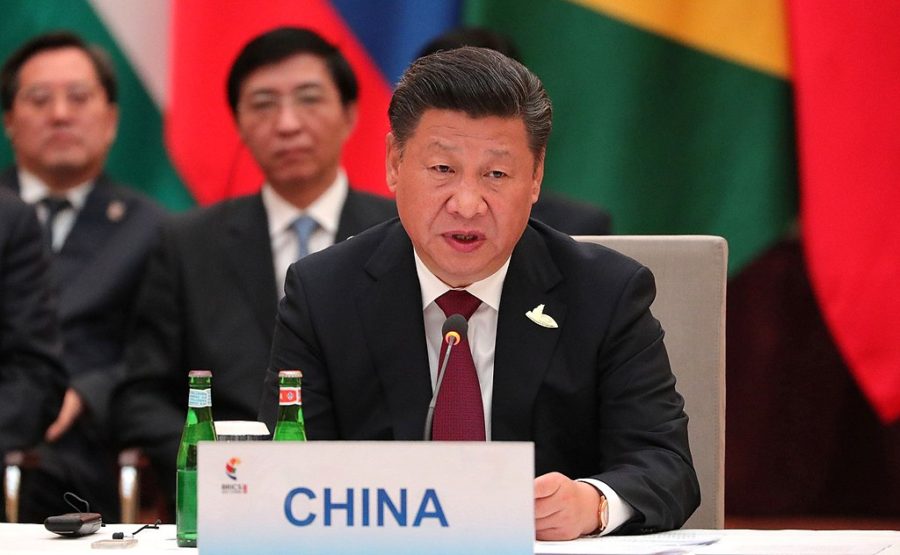
Afghanistan, and China’s fixation on the idea of Uyghur militants returning from Central Asia to set up camps, has driven an unprecedented level of Chinese security activity in neighboring states. In 2014, General Secretary Xi Jinping gave a series of secret speeches in the border region of Xinjiang, since leaked to the New York Times, in which he voiced concern that “Uyghur fighters” could use Tajik territory as a transit zone to carry out attacks in China. However, there is no evidence that Uyghur militants operate from Tajikistan. In fact, recent filings to the International Criminal Court stated that the country’s Uyghur population has dropped drastically after incursions by Chinese security services into Tajik territory, targeting civilians at bazaars across the country.
China and Russia are united by several interests in Central Asia. Both share the concern that the region could become a source of terrorism. Both want to contain any instability that may emanate from Afghanistan. And both want to push the United States out of the region. This last goal has been achieved, but neither Russia nor China can take the credit.
Goodbye, United States
With the withdrawal of US troops from Afghanistan, Washington’s already limited role in the region diminished even further. Prospects of a return of US troops after the withdrawal met with limited interest from Central Asian governments.
Immediately after 9/11, when the United States began its operations in Afghanistan, it used Central Asia as a logistics hub, opening bases in Uzbekistan and Kyrgyzstan. By 2014, both bases were closed. And the Northern Distribution Network, a series of supply lines to Afghanistan through Russia and Central Asia launched in 2009, was also shut down in 2015 amid rising tensions between Washington and Moscow.
Although the US government committed to building new facilities on Tajikistan’s border with Afghanistan, security assistance fell from a peak of $450 million a decade ago to just $11 million in 2020. The United States and NATO jointly conducted 85 of the 269 exercises involving Central Asian militaries since 1991, according to data compiled by the Oxus Society for Central Asian Affairs. But their frequency has also declined, from a peak of seven in 2003 to an average of just two since 2018, with no recent drills since the collapse of the Afghan government.
Russia Digs In
Russia remains the region’s main security partner and maintains military facilities in Kazakhstan, Tajikistan and Kyrgyzstan, supplied half of Central Asia’s arms imports and has organized 121 joint exercises since independence. Russia has a range of mechanisms for providing security, both bilateral and multilateral, such as the Commonwealth of Independent States and the Collective Security Treaty Organization.
Our data show that while Russia’s share of the regional arms market remained constant over the last decade, it gradually increased its participation in regional exercises, from 39 to 49 percent, as the region prepared for the withdrawal from Afghanistan. Central Asian states have agreements with Russia to buy weapons at reduced prices. In the case of the region’s poorest states, Tajikistan and Kyrgyzstan, Russia has simply donated weapons, most recently a delivery of 12 BRDM-2M patrol vehicles to Tajikistan in mid-September. Russia’s exercises in Asia are on average twice as large as those of its closest competitor, China. And unlike China, which focused on developing ties with Central Asian security services and police forces, Russia focused on cooperation between militaries. Two thirds of the joint maneuvers led by Russia involved the Russian army or air force. This reduced the potential for cooperation with Beijing.
In recent years, Russia has also demonstrated its hard-power capabilities in the region. In August 2018, Russian forces in Tajikistan launched a series of air strikes against drug traffickers, marking its first armed intervention in Afghan politics since the Soviet withdrawal in 1989. A few weeks after the fall of Kabul, Russia reinforced its 7,000-strong 201st military base in Tajikistan with 30 new tanks, 17 new BMP-2M infantry fighting vehicles and a batch of Kornet anti-tank guided missiles.
Since the Taliban’s rise, Russia has tested its logistics networks to transport Mi-8 and Mi-24 helicopters to the Gissar air base on the outskirts of Dushanbe, in case of destabilization in Afghanistan. Rapid-reaction capabilities to reinforce the Tajik border were improved, and Russia also transferred Su-25 attack aircraft from Kyrgyzstan to Gissar. Unlike competitors such as China, Russia has maintained its prestige in Central Asia thanks to its combat experience in Syria, which allowed it to train with tried and tested tactics and techniques.
China Heads West
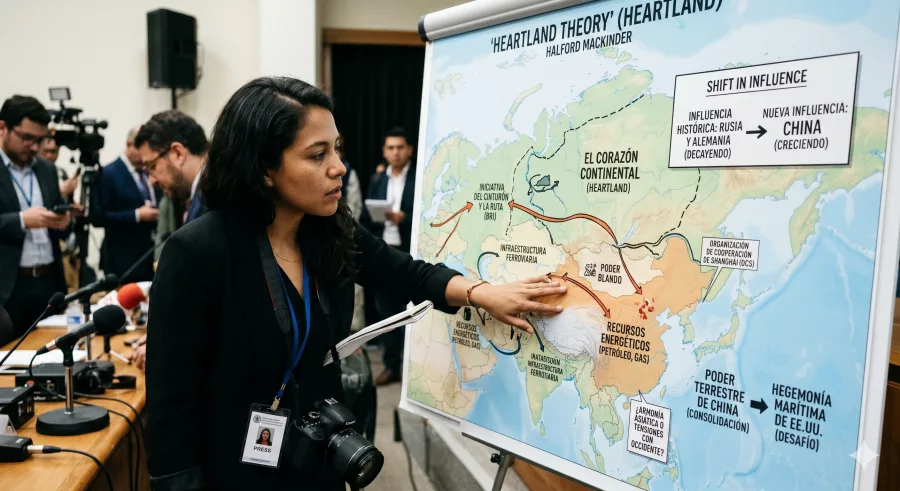
At the same time, China’s role in the region has been growing, and its arms market share rose from 1.5 to 13 percent over the last decade. China has also established a strategic foothold in areas where Russia lags technologically, such as drones. China sold its CH-3, CH-4, CH-5 and Wing Loong drones to partners such as Kazakhstan, Turkmenistan and Uzbekistan. China has also been more active in strategic drills, organizing 35 joint exercises bilaterally and through the Shanghai Cooperation Organization.
China began to take a more active role in Central Asian defense in 2014, viewing the region as a bulwark to prevent instability in Afghanistan from spreading to Xinjiang. These inward-looking goals led Beijing to focus primarily on integrating its internal security services, paramilitary forces and counterterrorism forces with those of neighboring states.
About 59 percent of the Chinese exercises we tracked involve security services, with special operations forces and police units. This shows a marked difference from the Russian approach to regional security. Chinese exercises include Cooperation-2019, a series of exercises that allow China to improve the interoperability of local paramilitary units with the armed wing of the Chinese Communist Party (CCP), the People’s Armed Police. Kyrgyzstan, Uzbekistan and Tajikistan took part, and it was the first time their national guard units trained with their Chinese counterparts in counterterrorism.
The security-focused nature of these drills also reveals China’s desire to continue appeasing Russia, which is seen as the dominant security actor in the region. In the past, Beijing showed deference to Moscow in this regard. But in 2017, the Development Research Center, an influential think tank under China’s cabinet, invited senior Russian researchers to a private seminar to learn Moscow’s red lines in the region. Recent drills even suggest deepening cooperation. In 2021, for example, the Sibu/Interaction exercise, the largest held in China with Russian forces, placed greater emphasis on joint actions, including command and control, than previous exercises.
China’s Growing Influence
Today, Russia and China do not appear to be competing in Central Asia. But this will be tested as China’s rise in the region continues during the first post-American era. China may not be eating into Russia’s arms market share today, but it may begin to as China’s domestic arms industry develops and continues to seek export markets.
Although China has been largely deferential to Russia, and is likely to remain so in the short term, there are signs that it has already considered its own approach to this strategic part of the world. China has increasingly developed its own initiatives without Russia. It organized its first exercise outside the auspices of the Shanghai Cooperation Organization in 2014, and set up its own multilateral mechanisms, such as the China+Central Asia foreign ministers’ meeting, which it launched in 2020, and the counterterrorism mechanism with Pakistan, Tajikistan and Afghanistan, which it established in 2016.
As China’s economic and security interests in the Central Asian region have grown, the existing framework of China-Russia cooperation has been folded into a broader Pax Sinica [Chinese peace] in which Beijing increasingly calls the shots.
This article was originally published in War on the Rocks on October 7, 2021.
Authors: Bradley Jardine and Edward Lemon