

Without a doubt, because of its importance, we must begin with the Communist Manifesto written by Karl Marx & Friedrich Engels in 1848; the foundation and engine of everything that came after. The examples below are a sample of its content.


At the time of the implantation of the communist economy in both countries, 8-9 years after Stalin and Mao came to power, terrible droughts occurred which, together with disastrous government decisions, caused millions of deaths. Next, 14 years after Stalin came to power and 17 years in the case of Mao, thousands, millions of members of the Party itself were purged.
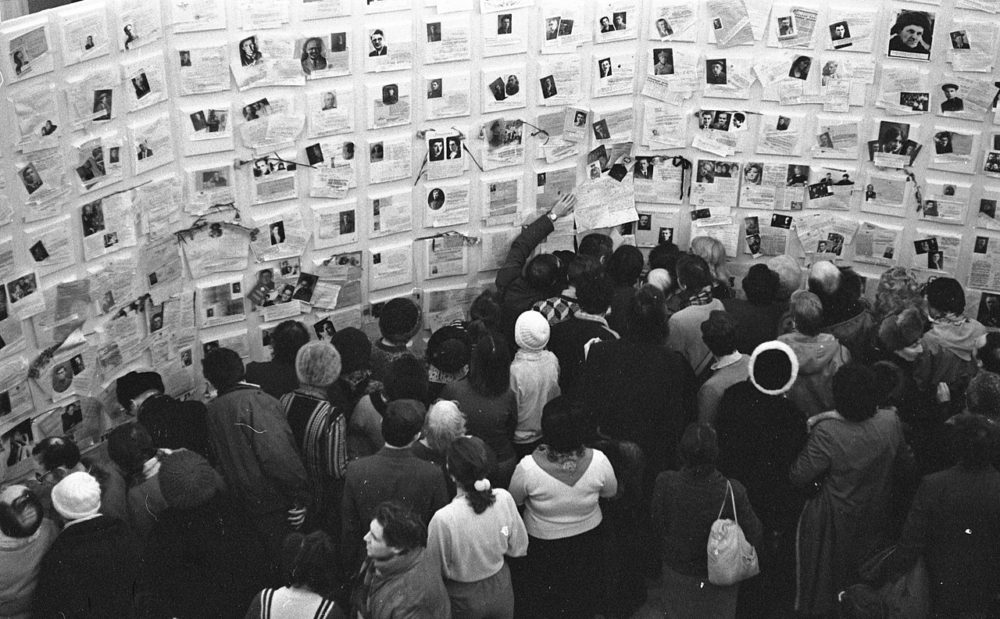
In reality, every communist system is founded on social control and control of companies and media, and as soon as the Warsaw Pact nations were told of their independence and freedom of action, the communist framework was negated, which triggered the cascade of Revolutions. In the USSR, freedom of the press or the abrupt change from a centrally planned economy to one with free prices, together with the impact of the Revolutions of ’89, collided with the previous framework, making it impossible to sustain the CPSU and many of the old Soviet governing structures.

The first, “socialism with Chinese characteristics,” justified economic opening and reform by the relatively low level of material wealth and the need to take part in economic growth before pursuing an egalitarian form of socialism, which in his view would lead to a communist society as described in Marxist orthodoxy. This involved a series of economic reforms that went from the decollectivization of agriculture and the opening of the country to foreign investment in the late 70s and 80s, to the privatization and consolidation of most of the state industry, including the lifting of price controls and protectionist policies in the late 80s and 90s. Despite this, public monopolies were maintained in strategic sectors such as banking, telecommunications and energy.

The Fall of Communism in China: Lessons from the Collapse of the USSR Part 1: Introduction Part 2: The Communist Framework Part 3: The Implementation of the Communist Framework Through Force and Coercion As we mentioned, based on the principles…
LEER MÁS
The Fall of Communism in China: Lessons from the Collapse of the USSR Part 1: Introduction Part 2: The Communist Framework Part 3: The Implementation of the Communist Framework Through Force and Coercion Part 4: Post-Stalin Evolution and the Collapse…
LEER MÁS